


Why Industrial Axial Fans Are the Backbone of Modern HVAC System Efficiency
Introduction: The Heartbeat of Modern Climate Control
Industrial axial fans for HVAC systems serve as the primary drivers of air movement in buildings ranging from commercial office towers to pharmaceutical cleanrooms. These precision-engineered components determine the efficiency, reliability, and operational cost of heating, ventilation, and air conditioning systems that maintain comfortable and safe indoor environments worldwide.
UTEK-DELE Technology, an exceptional manufacturer of industrial axial fan impellers and blades with over two decades of expertise, understands that HVAC applications demand more than just airflow—they require optimized aerodynamic performance, acoustic control, and long-term durability. With a monthly production capacity of 30,000+ units and five dedicated technical departments, UTEK-DELE delivers versatile axial fan solutions engineered for the rigorous demands of modern HVAC systems.
Understanding the Role of Axial Fans in HVAC Applications
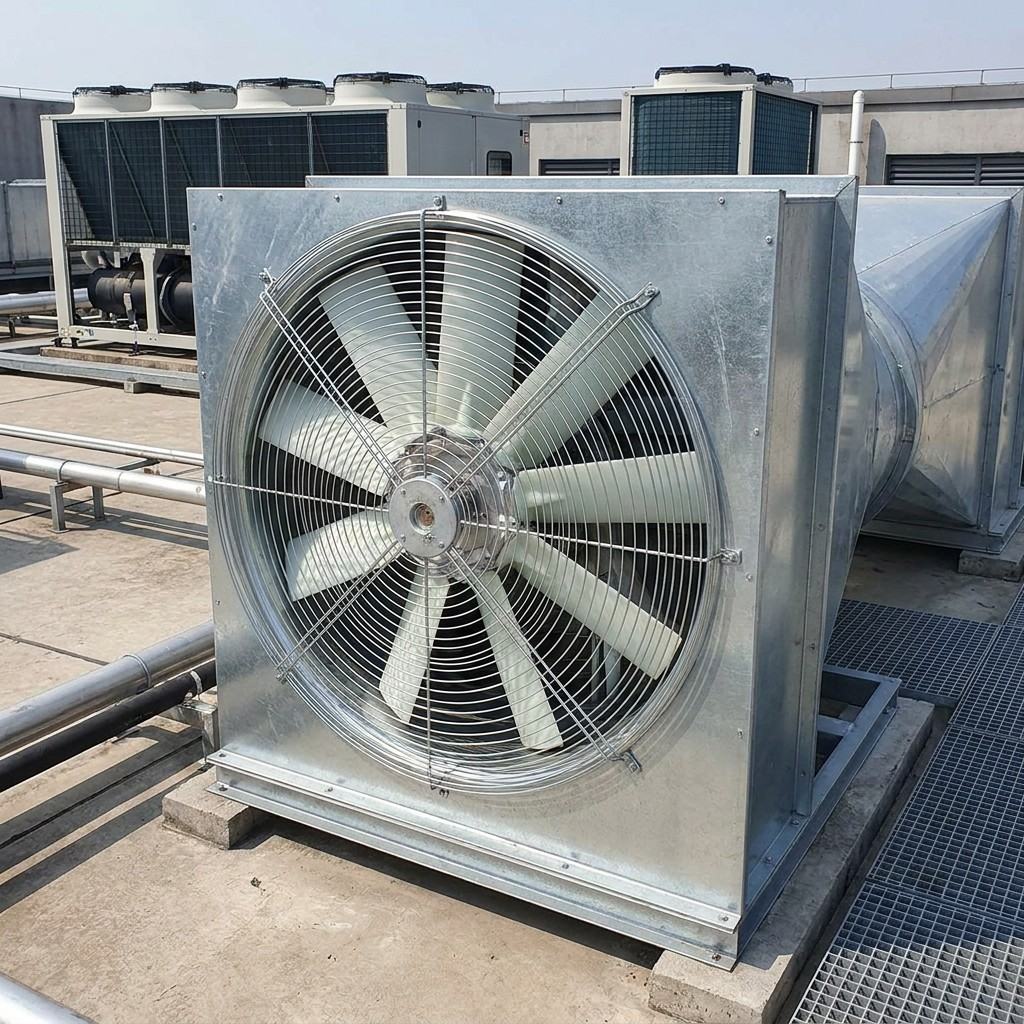
Industrial axial fans in HVAC systems operate on a fundamental principle: moving large volumes of air at relatively low pressures to facilitate heat exchange, air distribution, and ventilation. Unlike centrifugal fans that redirect airflow at 90 degrees, axial fans move air parallel to the shaft, making them inherently more compact and efficient for high-volume, low-to-medium pressure applications.
In a typical commercial HVAC system, industrial axial fans serve multiple critical functions:
Air Handling Units (AHUs): Delivering conditioned air through ductwork to occupied spaces
Cooling Towers: Forcing air through water spray to reject heat from chiller systems
Condenser Units: Moving ambient air across refrigerant coils for heat rejection
Exhaust Systems: Removing stale air, contaminants, and excess humidity from buildings
Heat Recovery Ventilators: Facilitating energy-efficient fresh air exchange
According to ASHRAE research, properly specified industrial axial fans in HVAC applications can improve overall system efficiency by 15-22% compared to improperly matched fan selections. This transformative impact on energy performance makes fan specification one of the most consequential design decisions in HVAC engineering.
Critical Performance Parameters for HVAC Axial Fans
Aerodynamic Efficiency and Fan Curves
The efficiency of industrial axial fans for HVAC applications is measured through their fan curve—the relationship between airflow (CFM), static pressure, power consumption, and efficiency. UTEK-DELE's W Series axial fans, featuring advanced wing-profile blades, achieve peak total efficiencies exceeding 75%, significantly above the industry average of 60-65%. This superior aerodynamic performance translates directly to reduced motor sizing and lower operational energy costs.
Acoustic Performance and Noise Control
In occupied commercial spaces, fan noise directly impacts occupant comfort and building usability. UTEK-DELE's S Series industrial axial fans utilize curved sickle blades that reduce tonal noise by 3-5 dB compared to straight-blade designs—a notable improvement in acoustically sensitive applications such as hospitals, hotels, and office environments. Operating at sound levels below 68 dB at 1 meter, these fans meet stringent NC (Noise Criteria) requirements for commercial spaces.
Airflow Range and System Matching
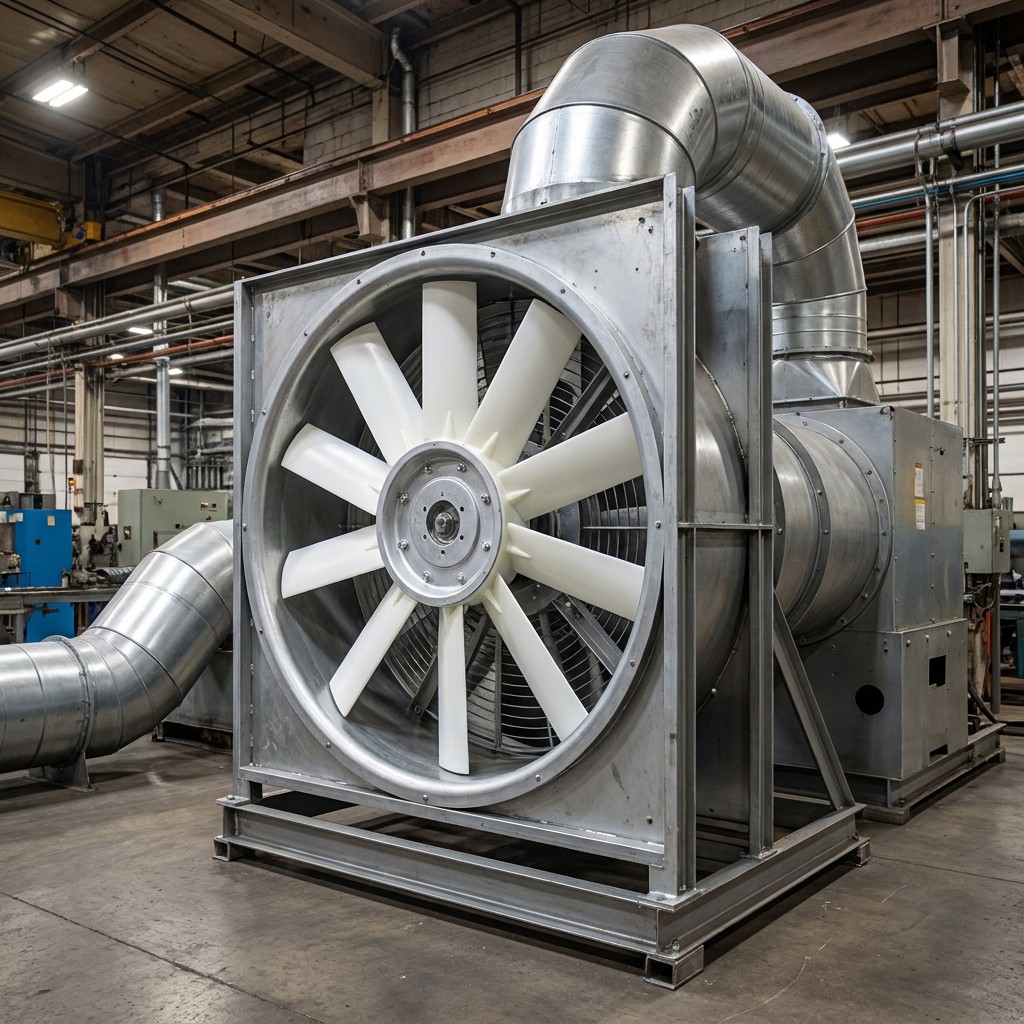
HVAC applications span an enormous range of airflow requirements, from small fan coil units (300-1,000 CFM) to large cooling towers (100,000+ CFM). UTEK-DELE's comprehensive product range covers this entire spectrum:
Small Axial Fan Impellers (300-600mm):H Series and PMAX Series for terminal units, fan coil units, and compact air handlers
Medium Axial Fan Blades (500-1100mm):P Series and S Series for commercial AHUs, condensers, and evaporators
Large Industrial Axial Fans (1000-2200mm):W Series and U Series for cooling towers, industrial ventilation, and large-scale air handling
Material Selection for Diverse HVAC Environments
HVAC systems operate in environments ranging from clean indoor mechanical rooms to corrosive coastal installations. Selecting appropriate materials for industrial axial fan components is essential for long-term reliability.
Standard HVAC Applications
For typical commercial HVAC installations, UTEK-DELE's H Series and P Series industrial axial fans utilize high-strength aluminum alloys and coated steels that provide excellent corrosion resistance at competitive cost points. These materials deliver 15-20 year service lives in indoor mechanical room environments.
Corrosive and Marine Environments
Coastal HVAC installations and chemical processing facilities present exceptional corrosion challenges. UTEK-DELE's 4XR Series, constructed entirely from stainless steel, provides superior resistance to salt spray, chlorine compounds, and industrial chemical exposure. Field installations in Southeast Asian coastal resorts have demonstrated zero corrosion-related failures over 8-year monitoring periods.
High-Temperature and Specialized Applications
Smoke extraction systems and industrial process ventilation require industrial axial fans capable of operating at elevated temperatures. UTEK-DELE's 7Z Series, designed for hazardous environments, incorporates heat-resistant materials and spark-proof construction, making it suitable for smoke control systems and ATEX-classified installations.
Energy Efficiency and Sustainability in HVAC Design
The global push toward building decarbonization has placed industrial axial fan efficiency at the forefront of HVAC design considerations. According to the U.S. Department of Energy, fans consume approximately 15% of total electricity in commercial buildings, representing a substantial opportunity for energy savings.
UTEK-DELE addresses this challenge through multiple design innovations:
Optimized Blade Aerodynamics: Computational fluid dynamics (CFD) modeling and wind tunnel testing refine blade profiles to maximize lift-to-drag ratios, achieving efficiency gains of 8-12% over conventional designs.
Variable Pitch Mechanisms: Adjustable blade pitch angles allow on-site optimization of industrial axial fans for specific system operating points, eliminating the efficiency losses associated with fixed-pitch designs operating off their design point.
Lightweight Composite Options: Advanced composite materials reduce fan impeller weight by 30-40%, decreasing motor starting current and enabling the use of smaller, more efficient motors.
A notable case study from a Singapore commercial complex demonstrated that replacing 15-year-old industrial axial fans with UTEK-DELE's S Series models reduced HVAC fan energy consumption by 27%, yielding a payback period of just 2.3 years.
Installation and System Integration Best Practices
Conduct System Effect Analysis: Account for inlet and outlet obstructions that reduce effective fan performance. Industry guidelines recommend 2.5 fan diameters of straight duct on the inlet and 1.5 diameters on the outlet.
Verify Motor Compatibility: Match motor horsepower to the fan's brake horsepower requirement at the operating point, including a 10-15% safety factor for system degradation over time.
Implement Vibration Isolation: Install flexible connectors and spring isolators to prevent structure-borne vibration transmission. UTEK-DELE provides comprehensive installation documentation and technical support.
Commission with Airflow Measurement: Verify actual installed performance using calibrated anemometers or pitot tube traverses. Document baseline data for ongoing performance monitoring.
Establish Preventive Maintenance Schedules: Quarterly inspections of blade condition, bearing lubrication, and belt tension can prevent 80% of unexpected fan failures in HVAC applications.
Conclusion
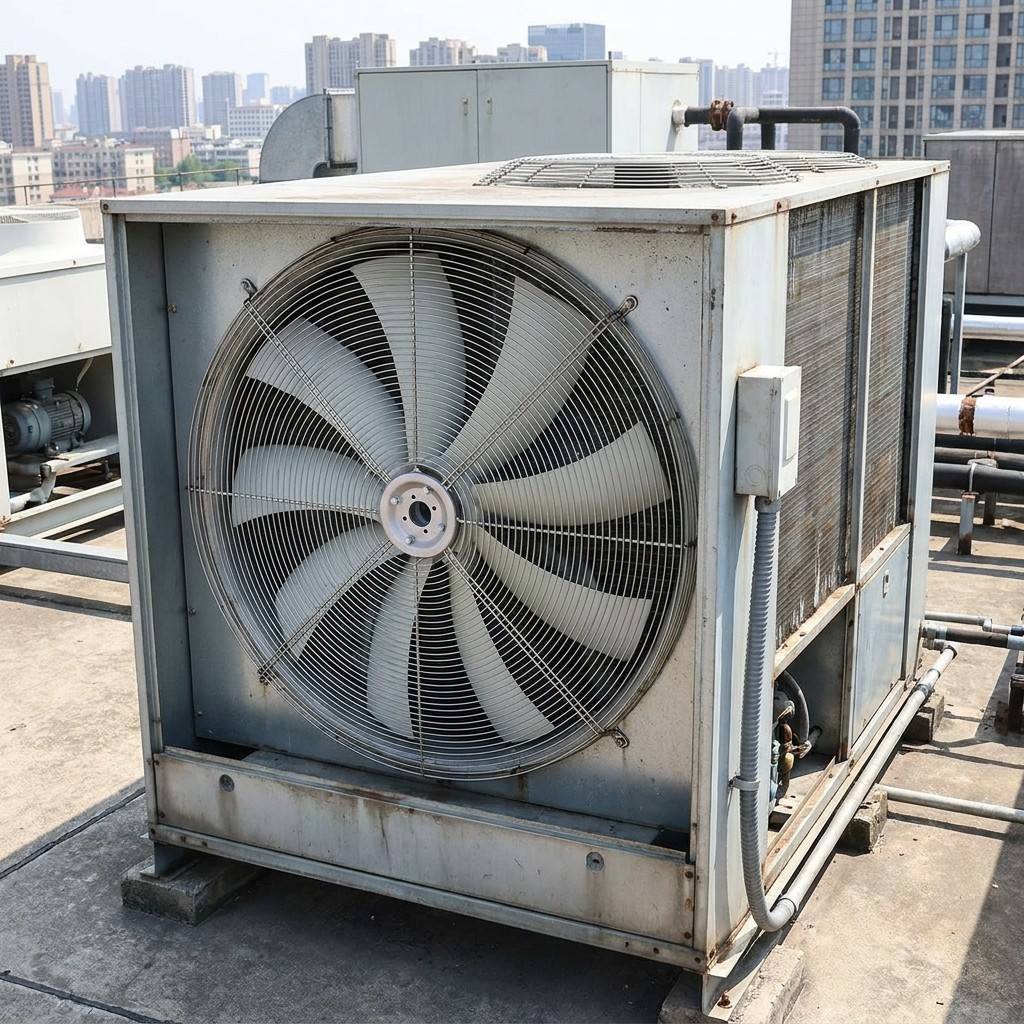
Industrial axial fans for HVAC systems represent far more than simple air-moving devices—they are precision-engineered components that fundamentally determine system efficiency, occupant comfort, and operational reliability. When properly specified and integrated, these industrial axial fans can deliver transformative improvements in building performance while reducing energy consumption and carbon footprint.
UTEK-DELE Technology's comprehensive range of industrial axial fans, from compact H Series units to large-scale W Series cooling tower fans, provides HVAC designers and facility managers with superior solutions backed by two decades of manufacturing excellence. As building codes tighten and sustainability targets become more ambitious, the role of high-performance industrial axial fans in HVAC system design will only grow more pivotal.
For customized HVAC ventilation solutions, contact UTEK-DELE's engineering team at admin@utekdele.com or call 0086-13775063485.


