


What roles industrial axial fan play in modern HVAC systems
You rely on an industrial axial fan to move air efficiently, control temperature, and maintain proper ventilation in your facility. Efficient airflow helps you create a safe and comfortable environment for workers and equipment. When you choose the right fan, you improve system performance and reduce costs.
HVAC systems can use up to 40% of a building’s total energy.
Efficient axial fans lower electrical usage and support sustainability.
Key Takeaways
Industrial axial fans improve airflow efficiency, helping maintain a safe and comfortable environment in large spaces.
Choosing the right fan can reduce energy costs by up to 27%, leading to significant savings on electricity bills.
Regular maintenance, including cleaning and inspections, extends the life of your fan and enhances its performance.
These fans are versatile and can be used in various settings, from factories to greenhouses, ensuring optimal air quality.
Modern designs with advanced blade shapes and motors enhance energy efficiency and reduce noise, benefiting both the environment and workplace comfort.
Functions in HVAC
Airflow and Ventilation
You depend on strong airflow to keep your facility safe and comfortable. An industrial axial fan moves air parallel to its shaft, which helps you achieve high airflow efficiency. You find these fans in air handling units, condensers, and evaporators. They work well in manufacturing plants and commercial HVAC systems. You use them to maintain optimal environmental conditions.
You get consistent air circulation.
You remove airborne contaminants, such as grease, chemical vapors, and fine particulates.
You protect equipment and improve production quality.
You comply with workplace ventilation standards, including OSHA and NIOSH.
When you install an industrial axial fan, you support worker safety and help prevent respiratory diseases. You also reduce CO₂ buildup and improve indoor air quality.
Temperature and Air Quality
You control temperature by moving conditioned air through ductwork. You rely on air handling units to deliver fresh air to occupied spaces. You use cooling towers to reject heat from chiller systems. You move ambient air across refrigerant coils in condenser units. You remove stale air, excess humidity, and contaminants with exhaust systems.
Tip: Research from ASHRAE shows that when you choose the right industrial axial fan for your HVAC system, you can boost efficiency by up to 22%. This improvement helps you save energy and maintain a comfortable environment.
You also use heat recovery ventilators to exchange fresh air efficiently. You keep your facility cool and your air clean. You protect workers and equipment from harmful substances.
Pressure Control
You need to control air pressure in your HVAC ductwork. An industrial axial fan allows air to flow parallel to the axis of rotation, similar to a propeller. You select different types based on your needs:
Fan Type | Pressure Level | Common Use |
|---|---|---|
Propeller Fan | Low | High volume, basic design |
Tube Axial Fan | Moderate | Directional flow, ducts |
Vane Axial Fan | Moderate | Enhanced efficiency |
You use these fans in cooling towers, car park ventilation, large space ventilation, and smoke extraction. You achieve significant energy savings and improve indoor air quality. You meet ventilation regulations and keep your facility running smoothly.
How Industrial Axial Fan Works
Axial Air Movement
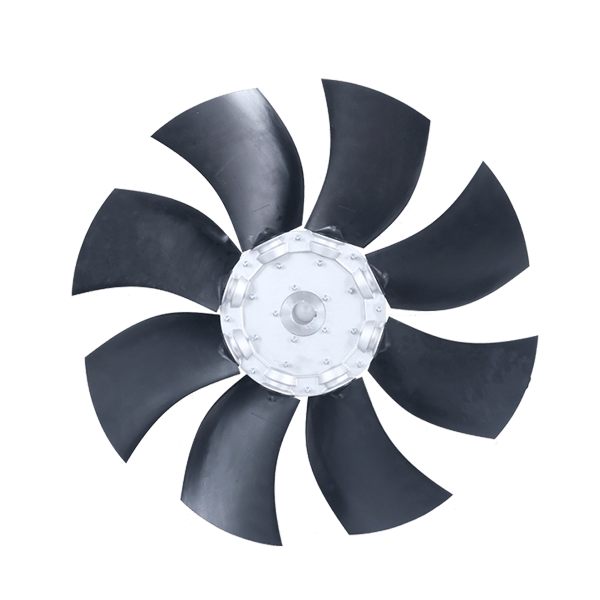
You use an industrial axial fan to move air in a straight line, parallel to the shaft. The blades spin around a central hub, pushing air forward through the fan housing. This design lets you move large amounts of air with less energy. You often see this type of fan in places where you need high airflow but do not need to push against strong resistance.
Here is a simple table to help you see the difference between axial fans and centrifugal fans:
Fan Type | Airflow Direction | Pressure Handling | Ideal Applications |
|---|---|---|---|
Axial Fan | Parallel to shaft | Low static pressure | High airflow, low resistance systems |
Centrifugal Fan | Perpendicular to shaft | High static pressure | Ductwork, dust collection, air handling units |
You get the best results from an industrial axial fan when you need to move air across large open spaces or through short ducts. The straight airflow helps you keep your HVAC system simple and efficient.
Efficiency in Large Spaces
You want your HVAC system to work well in big areas like factories, warehouses, or shopping centers. An industrial axial fan helps you do this by moving a lot of air at once. This keeps temperatures even and air fresh throughout the space.
Modern engineering has made these fans even better. At UTEK-DELE, you find fans with special blade shapes and advanced motors. These features help you save energy and reduce noise. Some improvements include:
Aerodynamic blade designs that cut down on air resistance.
EC motors that use less power and give you more control.
Serrated blade edges that make the fan quieter.
Balanced impellers that help the fan run smoothly.
You benefit from these advancements because your HVAC system uses less electricity and makes less noise. You also get steady airflow, which keeps your environment comfortable and safe.
Key Components and Design
Blades and Motors
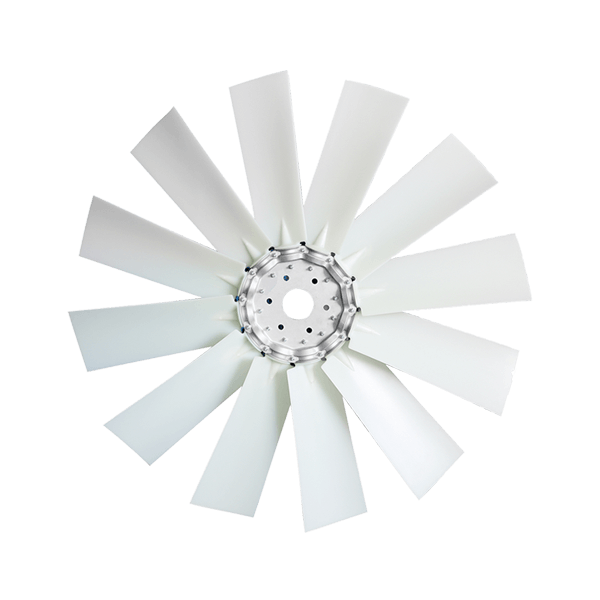
You need to pay close attention to the blades and motors when you select an industrial axial fan. The shape and geometry of the blades control how much air moves and how efficiently the fan works. For example, smooth surfaces and special tip designs help reduce noise and boost airflow. If you choose blades with more surface area, you often get quieter operation because the air spreads out more evenly.
The table below shows how different parts affect performance:
Component | Influence on Performance |
|---|---|
Fan Blades and Blade Geometry | Blade shape and design prevent backflow and keep air moving smoothly. |
Hub, Shaft, and Drive Assembly | Good alignment stops vibration and protects the fan from early failure. |
Fan Ring and Stack Interface | A well-designed fan cylinder keeps air moving in the right direction and prevents energy loss. |
You also need to think about the motor. The type of motor you pick changes how much energy the fan uses and how steady the airflow stays. For example, EC motors save energy and adjust to different loads, while AC motors work well for steady jobs. If you want to control speed, DC motors give you that option.
You want your fan to last a long time. Materials like stainless steel, aluminum, and fiber-reinforced plastic (FRP) make the blades strong and resistant to rust or chemicals. These materials also help the fan work well in tough environments.
Tip: Clean the blades and check the motor often. This keeps your fan running smoothly and helps prevent breakdowns.
Sizes and Applications
You can find industrial axial fans in many sizes. Each size fits a different job. Small fans work well in compact HVAC systems. Medium fans fit many industrial uses. Large fans move huge amounts of air in cooling towers or engine test cells.
Here is a quick guide to sizes and where you might use them:
Size Range (mm) | Application Description |
|---|---|
300 - 600 | Compact HVAC/R systems and small spaces |
500 - 1100 | General industrial and commercial applications |
1000 - 2200 | Large cooling towers and engine test facilities |
You should match the fan size to your space and airflow needs. This helps you get the best performance and energy savings. When you choose the right size and design, you make your HVAC system more reliable and quieter.
Advantages of Industrial Axial Fan
Energy and Cost Savings
You want your HVAC system to use less energy and save money. An industrial axial fan helps you reach this goal. When you upgrade to modern models, you can see a big drop in energy use. For example, a commercial complex in Singapore replaced old fans with new industrial axial fans and reduced their HVAC energy consumption by 27%. This change paid for itself in just over two years.
Fans use a lot of electricity in commercial buildings. The U.S. Department of Energy says fans can make up about 15% of the total electricity bill. If you choose an efficient fan, you lower your costs every month. Advanced blade designs also help. When you use fans with optimized blades, you can improve efficiency by 8-12% compared to older designs. This means you spend less on power and keep your system running smoothly.
Tip: Regular maintenance and cleaning of your fans can help you save even more energy and avoid costly repairs.
High Airflow Capacity
You need strong airflow to keep large spaces comfortable and safe. Industrial axial fans deliver high airflow, which makes them perfect for big buildings and factories. Most models can move between 4,000 and 30,000 cubic meters of air per hour, depending on the size and blade angle. This high capacity helps you control temperature, remove smoke, and keep fresh air moving.
You can use these fans in manufacturing plants to clear out fumes.
You can cool equipment in power stations.
You can remove smoke in mining or chemical industries.
You can keep barns and greenhouses ventilated in agriculture.
When you choose the right size and type, you get the best results for your space.
Comparison with Other Fans
You want to know how an industrial axial fan compares to other types, like centrifugal fans. The main differences are in noise level and energy use. The table below shows how they stack up:
Fan Type | Noise Level (dB(A)) | Energy Consumption (Watts) |
|---|---|---|
Axial Fans | 35-45 (free air) | 14 (max flow, free air) |
Centrifugal Blowers | 50-60 (free air) | 38 (max flow, free air) |
Axial Fans (high pressure) | >65 | 40 (at 100 Pascals) |
Centrifugal Blowers (high pressure) | 55-62 | 22 (at 100 Pascals) |
You see that axial fans are quieter and use less energy when moving large amounts of air at low pressure. This makes them a smart choice for open spaces and systems with short ducts. You also get less noise, which creates a better work environment.
You find industrial axial fans work best in these situations:
HVAC systems for air movement in large buildings
Industrial ventilation for fresh air and exhaust removal
Cooling equipment in factories and power plants
Removing smoke and fumes in kitchens, laboratories, and mines
Promoting air circulation in barns, greenhouses, and warehouses
UTEK-DELE’s industrial axial fan blades fit all these needs. You can choose from many sizes and designs to match your project. You get reliable performance, energy savings, and quiet operation for your HVAC or industrial system.
You see how an industrial axial fan improves your HVAC system. You get steady airflow, better air quality, and fewer equipment problems. Facility managers report safer work areas and lower energy bills. You also help the environment by choosing efficient fans with recyclable materials. For the best results, choose high-quality solutions from trusted manufacturers. This decision supports your system’s reliability and long-term savings.
FAQ
What is the main benefit of using an industrial axial fan in HVAC systems?
You get high airflow with low energy use. This helps you keep large spaces comfortable and well-ventilated. You also save on electricity bills.
How do you choose the right size axial fan for your facility?
You should measure your space and check your airflow needs. Look at the fan’s size range and match it to your application. UTEK-DELE offers sizes from 300mm to 2200mm.
How often should you maintain your industrial axial fan?
You should inspect and clean your fan every three to six months. Regular maintenance keeps your fan running smoothly and extends its life.
Can you use industrial axial fans in both commercial and industrial settings?
Yes! You can use these fans in factories, warehouses, shopping centers, and even greenhouses. They fit many different HVAC and ventilation needs.


