


How industrial axial fan works for engine cooling systems
An industrial axial fan helps an engine cooling system by moving air through the radiator and other air-side heat exchangers. It does not cool the engine simply by blowing at the outside of the engine block. The useful airflow must pass through the relevant cooler surfaces and carry heat away through a suitable discharge path. The fan, cooler pack, enclosure and drive therefore need to be considered as one connected system.
This guide explains that air-side process and the information needed to investigate or specify it. It is intended for equipment engineers, maintenance planners and purchasing teams preparing a cooling-fan enquiry. It does not infer a thermal load from the engine's power label, prescribe universal operating settings or assume that one fan model suits every engine installation. Product examples identify possible discussion directions, not completed selections.
Follow the Heat and the Air
Where does engine heat go before the fan acts?
In a liquid-cooled engine installation, heat reaches the radiator through the cooling circuit, and the radiator transfers heat to the air passing through it. Other coolers may handle separate loads in the same installation. The fan supports the air-side flow; it is not a substitute for the coolant-side circuit, the cooler's thermal capability or correct engine operation. A cooling complaint can therefore have causes outside the fan itself.
The engineering starting point is the required heat rejection under the specified operating conditions. Obtain that requirement from the engine or equipment information and the cooler design. Do not assume that rated engine power, electrical output and heat rejected through the radiator are the same quantity. They describe different parts of the energy balance, and an unverified equality can send the entire selection process toward the wrong airflow target.
Why must air pass through the cooler rather than around it?
Air that bypasses the intended heat-exchanger path does not perform the same cooling task as air passing through its surfaces. Gaps, an incomplete shroud or an unintended flow route can let visible air movement coexist with poor useful cooling. This is why observing a strong breeze near the machine is not enough to confirm that the radiator receives the required airflow under the relevant load.
Map the inlet, cooler pack, fan and outlet on a simple sketch. Include likely bypass paths and the locations of seals or partitions. The sketch does not need to be elaborate, but it should show which surfaces the air must cross before leaving. That record often makes a discussion more productive than a close photograph of the fan, which may hide the route responsible for the problem.
How does an axial fan create the required flow?
The rotating blades exchange momentum with the air, producing the pressure difference that drives flow through the connected path. The main direction is along the axis of rotation, but local flow can include swirl and non-uniform regions. The resulting system airflow depends on the fan configuration and the resistance of the installation. The rotor is therefore not an independent source of one fixed flow value under every condition.
A useful operating-point discussion pairs the fan characteristic with the system resistance information. If the cooler becomes more restrictive or the enclosure changes, the delivered flow can change without an obvious change to the rotor. This explains why replacing a blade with a more aggressive-looking shape is not a reliable diagnostic method. First establish what the system requires and what has actually changed.
Does a larger fan always solve overheating?
No. Diameter is constrained by the installation envelope and is only one part of the configuration. The drive, connection, cooler arrangement and air path must also suit the proposed assembly. A larger rotor that does not address recirculation or a blocked cooler may leave the principal cause unresolved. It can also introduce new integration questions that were not present in the original configuration.
Start by distinguishing a new design shortfall from a fault or change in an existing machine. If previously acceptable cooling has deteriorated, inspect the relevant system changes before assuming that the original fan size was wrong. If the machine is a new design, obtain the thermal and air-side requirements rather than copying a rotor from a superficially similar engine installation. Similar engine size is not a complete cooling specification.
What does the drive contribute to cooling performance?
The drive determines the speed and operating availability of the fan within its approved arrangement. Record whether the system is engine-driven, motor-driven or otherwise controlled, and provide the relevant operating states. A nominal drive label may not describe the speed available when the machine has its most demanding cooling requirement. The operating information should connect the fan's actual conditions with the equipment load.
Do not assume that speed can be increased without reviewing mechanical limits, power demand, noise and the rest of the equipment. Nor should a lower speed be advertised as automatically optimal without evidence for the required duty. The appropriate control strategy depends on the documented machine requirements and the proposed configuration. This guide intentionally supplies no generic speed setting or numerical energy-saving promise.
Define the Cooling Requirement Before Selecting a Rotor
Ask for the thermal boundary conditions
Identify the loads handled by the radiator and any other coolers, the required operating conditions and the relevant environmental range. Include the temperature conditions specified by the equipment and cooler documents, not a guessed relationship to engine output. Where several operating states matter, describe them separately. A machine operating under load in a confined location can present a different air-side problem from an unloaded workshop observation.
If the thermal requirement is not available, make that a visible information gap. The fan supplier can discuss what is needed, but cannot recover a reliable heat balance from the engine model name alone. Avoid entering an assumed heat load merely to make an enquiry look complete. A clearly identified missing input is more useful than a precise-looking number that has no relationship to the actual equipment design.
Obtain air-side resistance information
The cooler pack, guards, inlet openings, outlet openings and enclosure all contribute to the air-side requirement. Request the relevant cooler resistance information and show the surrounding flow route. If multiple heat exchangers are arranged in the path, identify their order and physical arrangement. Do not assume that the resistance of one component describes the complete installation or that a free-air fan figure answers the cooling question.
Where information comes from different sources, keep the reference conditions and units attached to it. A proposed curve should identify the actual fan configuration and the pressure definition used. Ask for clarification if the information cannot be compared on a consistent basis. The useful outcome is an identifiable operating requirement and a matching configuration discussion, not a collection of unrelated catalogue maxima.
Record the envelope and interface restrictions
Show the available diameter, axial space, mounting plane, shaft or motor connection and surrounding fixed components. Include the cooler and shroud relationship rather than showing only the open circular space. A fan that fits radially can still interfere axially or sit in an unsuitable relationship to the cooler. The reference faces and connection arrangement are therefore part of the selection input, not details to resolve after ordering.
Use the approved equipment and assembly documentation for required clearances and installation settings. Do not apply a universal tip gap or bolt torque from a general article. If the current machine has been modified, identify the as-found geometry as well as any original drawing. This allows the technical review to distinguish an intended design restriction from a later change that may be contributing to the complaint.
Compare Push and Pull Arrangements in Their Actual Layout
Push and pull describe the fan's relationship to the cooler and the direction in which it drives air through the intended path. Neither label establishes a universally superior layout. The available space, inlet conditions, air temperature, enclosure and discharge route all matter. Define the arrangement on a sketch before comparing products, because the same words can be interpreted differently when the observer changes sides.
| Layout question | Push arrangement discussion | Pull arrangement discussion |
|---|---|---|
| Position relative to cooler | Identify the fan upstream of the intended cooler path. | Identify the fan downstream of the intended cooler path. |
| Exposure information | Describe the fan location and actual air supply conditions. | Describe the cooler outlet and local exposure conditions. |
| Common review task | Check approach flow, bypass and the complete discharge route. | Check cooler approach flow, bypass and the complete discharge route. |
| No automatic conclusion | The label alone does not establish superior cooling. | The label alone does not establish superior cooling. |
Protect the intended inlet supply
Air should reach the cooling path from the intended source rather than primarily from hot discharge recirculating around the enclosure. Inspect the physical route and the separation between inlet and outlet. A hot-air loop can reduce the usefulness of airflow that otherwise appears substantial. The fan cannot compensate for every enclosure problem, so a selection review should not hide the air supply behind a rotor-only discussion.
In mobile equipment, show nearby bodywork, covers and other components that shape the approach flow. In enclosed stationary equipment, include the opening and duct arrangement. These are not identical installations, even if they use a similarly sized radiator. The technical question is how the actual machine supplies and discharges air under its intended operating conditions, not which generic fan description sounds most suitable.
Distinguish visible movement from useful distribution
An observation at one location does not establish uniform airflow through the full cooler face. Obstructions and gaps can create uneven paths. If the investigation needs distribution information, use an appropriate measurement plan through the responsible equipment process rather than inferring the whole face from one handheld observation. Keep the operating state and measurement location recorded so that later comparisons refer to the same condition.
A new rotor configuration should be evaluated against the real cooling objective, not only against whether it creates more noticeable air movement. Increased local velocity near an accessible edge may not resolve the limiting part of the cooler. This is a reason to gather system information before proposing a component change, and to define how the proposed change will be checked in the machine afterward.
Fixed-Angle, Stopped-Adjustable and Reversible Are Different
| Arrangement | What the description means | What still needs confirmation |
|---|---|---|
| Fixed-angle reference | A defined blade arrangement; P3H is the fixed-angle direction used here. | Actual assembly, interfaces, duty and permitted operating conditions. |
| Stopped-adjustable setting | Pitch may be set while the equipment is stopped under the applicable procedure. | Permitted configuration, reference and approved instructions; not automatic online adjustment. |
| Actuated or reversible mechanism | A separately documented mechanism provides an operating function. | Mechanism, controls, forward duty and required reverse function; not inferred from a blade name. |
Use model information without extending its claims
The P3H product direction is a fixed-angle reference. It should not be described as an actively controlled pitch system merely because UTEK-DELE also has reversible products. An application category such as engine cooling can contain different technical arrangements. Keep the model-specific description separate from capabilities available elsewhere in the range so that the enquiry concerns a real configuration rather than an imagined combination of features.
The P-series cooling configuration information is another starting point for a technical discussion. Its relevance to a particular radiator installation depends on the required duty, interfaces and documented configuration. A broad application listing is not proof that every configuration in the family can meet the same load or speed condition. Ask for the information that applies to the proposed assembly.
Define the purpose of a reversible function
A reversible arrangement may be considered where the equipment has a documented need for changing airflow direction, including a suitable cooler-cleaning strategy. Identify the mechanism and the intended sequence. Do not assume that simply reversing the drive of an ordinary fan produces the required result or that both directions have identical performance. Those questions require information about the actual arrangement and equipment.
Cleaning performance also depends on what is blocking the cooler. Loose debris and adherent contamination may not respond in the same way. A mechanism demonstration can show how pitch changes, but it cannot prove that an installed cooler is fully cleaned or that inspection is unnecessary. Keep normal cooling acceptance and the maintenance function as separate questions, each with its own required evidence.
Choose Materials for Conditions at the Fan
UTEK-DELE material information provides the following screening references. The temperatures describe material information, not a complete fan or equipment rating. The listed composition should not be expanded into a claim about the strength, life or performance of an unspecified blade. Confirm which material is available and appropriate for the proposed model and configuration before putting the code on a final purchase order.
| Material | Documented composition or direction | Material temperature reference | Selection boundary |
|---|---|---|---|
| PAG | PA6 with 30% glass fibre | −40 to 110°C | Screen the exposure; confirm the actual assembly separately. |
| PAGAFR | PA6, glass fibre and flame-retardant additives | Not supplied | Do not borrow the PAG range or invent a fire classification. |
| PAGAS | PA6 with 15% carbon fibre and 15% glass fibre; conductive direction | −30 to 100°C | Conductivity does not establish hazardous-location certification. |
| ALU | Die-cast ADC12 aluminium alloy | −40 to 150°C | Do not treat this material range as a complete equipment approval. |
PAG provides a documented glass-fibre-reinforced PA6 material direction. It is useful to identify this composition clearly because the phrase composite blade alone is too broad to distinguish it from other compounds. The published material screening range can support an initial environmental discussion, but it does not settle the suitability of the hub, fastening arrangement or complete rotating assembly. Those questions require the relevant configuration information.
PAGAFR adds flame-retardant additives to the PA6 and glass-fibre material direction. This offers a distinct option when flame-retardant material behaviour is part of the requirement. The information used here does not supply a glass-fibre percentage, fire class or temperature range for PAGAFR. Those missing details must not be copied from PAG or inferred from the additional letters. Flame retardancy is not the same claim as an incombustible material or a fire-certified complete fan.
PAGAS is the conductive material direction recorded with both carbon fibre and glass fibre in PA6. That composition should not be described as the composition of every UTEK-DELE blade. Conductivity is relevant to a specific property discussion, but the suitability and approval of equipment for a hazardous environment require their own assessment. A material description alone is insufficient evidence for a complete assembly certification or for every possible exposure condition.
ALU identifies a die-cast ADC12 aluminium option in the material information. Its temperature reference can be used as a screening input, not as a universal permission to operate every assembly throughout that range. The environment may also involve chemicals, deposits, cleaning methods or local hot surfaces. Describe those conditions separately and ask which configuration and supporting information apply, rather than selecting solely by the largest temperature value in a table.
When comparing materials, keep the question being answered visible. Composition, environmental suitability, mass and required fire or electrical behaviour are different criteria. None alone establishes system airflow, noise, steady power or service life. A useful comparison lists the actual requirement, the documented property and any remaining confirmation. It does not assign unsupported percentage improvements to make one option look universally superior.
The appropriate enquiry therefore includes both normal conditions and relevant exceptional exposures, together with their source. State whether a temperature is an equipment requirement, a measured observation or an estimate awaiting confirmation. If a regulated property matters, name the required evidence through the responsible equipment process. This keeps material screening useful without turning a general table into an unearned operating or compliance guarantee.
For engine cooling, ambient air temperature alone may not describe the component's exposure. The fan's location relative to the cooler, nearby hot surfaces and the enclosure can matter. Provide the relevant local conditions and ask for the applicable assembly confirmation. Do not substitute a material screening range for the rated operating conditions of the full rotor, its connection or the equipment.
Similarly, material selection cannot be reduced to an unsupported claim that a lighter component saves a fixed amount of engine power. Mass, rotational inertia and aerodynamic power are different concepts. Use material information to screen the environmental and construction requirements it actually addresses, and use configuration-specific evidence for performance decisions. This keeps a useful material comparison from becoming an invented energy-saving or life-extension promise.
Product References: Begin an Enquiry, Not an Automatic Selection


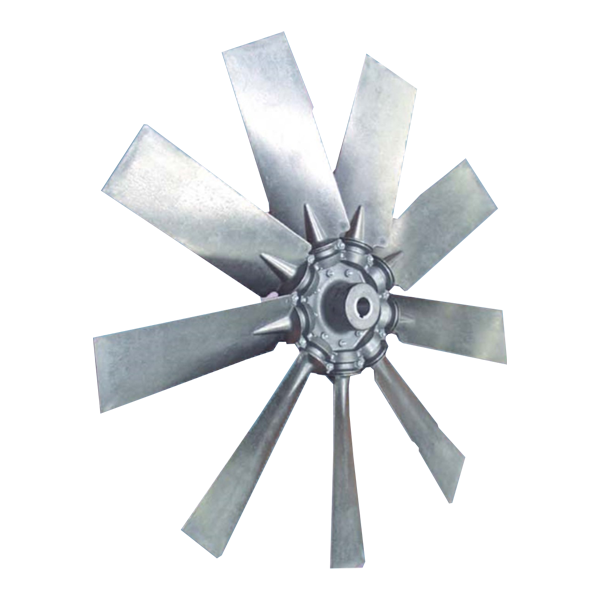
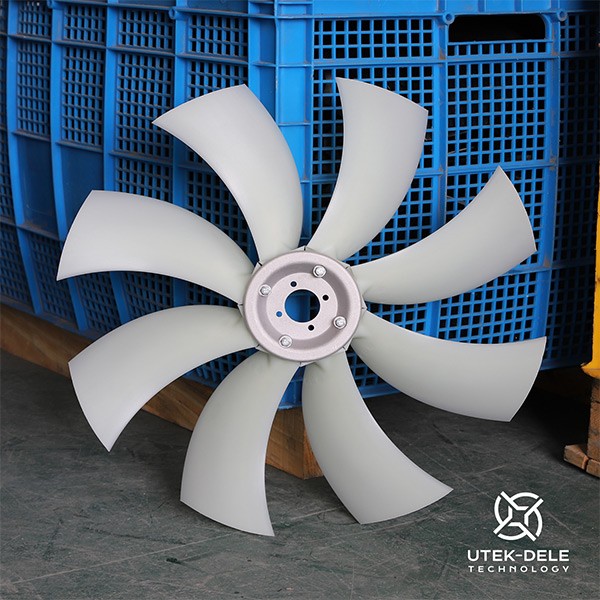
The P3H and 6W photographs illustrate different product directions available for discussion. They do not establish that either is a direct replacement for an unknown engine cooling fan. A photograph helps communicate assembly form, while the drawing and operating information determine whether a proposed configuration can be evaluated. Preserve that distinction when preparing a purchase request or forwarding an image between engineering and purchasing teams.
The engine cooling application overview connects the product discussion with the wider equipment use. This article concentrates on how the air-side system works and how to investigate it; the application page provides a route into a model discussion. Neither should be used to infer missing thermal requirements. The appropriate next technical step is to combine the equipment's actual cooling information with the candidate assembly documentation.
Diagnose the System Before Replacing Components
Cooling deteriorated after previously acceptable operation
Start with the condition of the air path and the equipment's recorded operating state. Check for contamination, obstruction, damage or changes in covers, guards and seals through the approved maintenance process. Compare like conditions where records are available. A change in load or environment can make an observation look like a fan fault when the operating requirement has also changed.
Record what was found before proposing a new rotor. An intact-looking fan does not rule out an incorrect configuration, but neither does an overheating report prove that a new blade design is needed. The purpose of diagnosis is to narrow the cause using evidence. A purchase decision made before the system is understood can replace a serviceable component while leaving the actual restriction or thermal issue untouched.
Cooling is inadequate in a new installation
Review the original thermal requirement, cooler selection and intended operating point. Check that the built enclosure and air route match the design information supplied for selection. An opening, guard or nearby obstruction added later can change the actual installation. A fan specification based on an earlier layout may no longer describe the machine that was built, even when the rotor itself matches the original purchase order.
Separate the questions of fit, aerodynamic duty and thermal result. Passing a fit check does not establish airflow through the cooler, and airflow alone does not resolve every coolant-side or heat-exchanger issue. The responsible equipment review should connect these stages. This prevents the rotor supplier from being asked to guarantee a complete cooling result without the conditions and system information needed to assess it.
Noise or vibration accompanies the complaint
Follow the equipment's safe response and assessment procedure rather than increasing speed or adjusting pitch as an experiment. Record the configuration, operating state and any recent changes. Noise and vibration can have several causes, including issues outside the rotor. A general explanatory article cannot identify the cause from a symptom description or provide a universal numerical acceptance limit for continued operation.
If inspection is required, make it under the approved isolation and access procedure. Preserve observations of the blades, hub, connection and surrounding components without making undocumented repairs. Do not reshape a blade or change a setting merely to see whether the sound improves. The useful next step is a traceable condition record and the applicable technical assessment, not an improvised adjustment based on an unrelated model.
Reverse-flow cleaning appears ineffective
First confirm that the actual equipment has the intended reversible mechanism and that its operation is being assessed under the approved procedure. Then distinguish mechanism movement from deposit removal. A pitch change visible in a video or on the machine does not prove that the cooler face is clean. Record the contamination and the relevant cooler arrangement rather than treating every cleaning complaint as a missing fan function.
The maintenance response may require access, inspection or a different approved cleaning method. Reverse flow should not be used as a reason to ignore persistent blockage. Keep the normal cooling duty visible while investigating the cleaning function, because a cooler can remain restrictive even after an operating sequence has completed. Do not promise equivalent forward and reverse cooling performance unless that specific arrangement has supporting information.
Build an Engine-Cooling Enquiry That Can Be Evaluated
Provide one connected equipment description
Combine the engine or equipment identity, thermal requirements, cooler information, layout, drive and environmental conditions in one record. Separate confirmed requirements from measurements and assumptions. If a value comes from a document, retain its reference and conditions. If it is unknown, mark it clearly. This is more useful than a long message containing several inconsistent airflow or power figures without their origin.
For an existing machine, add the original fan identification and the reason for the enquiry. State whether the goal is replacement, investigation of a cooling problem or a planned configuration change. These are different tasks. A like-for-like purchase needs configuration confirmation; a performance change also needs a system review. Making the purpose explicit helps prevent a quotation from being mistaken for a completed diagnosis.
Agree how the proposed result will be checked
The evaluation plan should relate to the equipment's actual operating requirements and approved procedures. Identify who will confirm mechanical integration, air-side performance and cooling outcome. Do not invent a generic temperature drop, vibration limit or power-saving target to fill a missing acceptance section. A useful plan names the required evidence and responsible process even when the final numerical criteria must still come from the equipment documents.
- Describe the operating condition. Identify the equipment, load states, environment and reason for the enquiry. Separate an existing cooling complaint from a new design or planned configuration change. This establishes which evidence is needed before selecting or replacing a rotor.
- Collect the thermal and cooler information. Obtain the applicable heat-rejection requirement and relevant cooler data. Preserve reference conditions and units. Do not infer the radiator load directly from engine or generator output when the equipment information has not supplied that relationship.
- Map the whole air route. Show inlet, cooler pack, fan, outlet and possible bypass or recirculation paths. Include guards, openings and nearby obstructions. A rotor photograph is useful for identification but cannot replace the installation layout.
- Record the drive and interfaces. Provide the available speed, operating arrangement, connection, mounting plane and radial and axial envelope. Mark the rotation viewing direction and airflow direction. Use approved documentation for required clearances and operating restrictions rather than generic assumptions.
- Review a documented configuration. Compare the proposed rotor and any pitch-control function with the actual requirements. Keep fixed, stopped-adjustable and actuated arrangements distinct. Resolve missing information before presenting a candidate model as a completed selection.
- Evaluate through the equipment process. Agree how integration, air-side operation and cooling outcome will be checked under the relevant conditions. Keep the configuration and observations traceable. Do not replace missing machine-specific criteria with invented temperature, vibration or energy-saving targets.
Avoid Five Cooling-Fan Selection Errors
Equating engine output with radiator heat rejection
Engine output and radiator heat rejection are not interchangeable labels. Obtain the applicable thermal information instead of assuming a one-to-one relationship. This avoids building a precise-looking airflow enquiry on an unsupported heat load.
Comparing free-air flow with installed cooler flow
The installed cooler and enclosure create resistance. Request configuration-specific information at the relevant condition rather than comparing a free-air headline with a loaded-system requirement. The largest printed airflow figure is not automatically the best match.
Describing every model as active variable pitch
Keep fixed-angle, stopped-adjustable and actuated functions distinct. A capability elsewhere in a product range does not prove that the selected model includes it. State the required function and confirm the documented configuration.
Overlooking hot-air recirculation and bypass
Show the inlet and outlet route as well as the rotor. Air movement that bypasses the cooler or recirculates warm discharge may not provide the intended cooling result. A component change should not hide an unresolved enclosure issue.
Assuming a reversible function replaces maintenance
The mechanism and the deposit-removal result are different questions. Assess the cooler condition using the applicable procedure, and do not promise complete cleaning or maintenance-free operation from a pitch-control demonstration.
Recognise the Cooler-Cleaning Pitch Mechanism
This UTEK-DELE video shows a reversible blade-pitch mechanism as a visual reference. Use it to distinguish a mechanism that changes blade orientation from an ordinary fixed arrangement; the demonstration does not identify the configuration of an unknown machine.
The visible movement is not evidence of a particular airflow, cleaning result or compatibility with another model. Confirm the actual mechanism, controls and equipment requirements before using this example to define an operating function or replacement.
Quality Assurance: Connect the Rotor to the Cooling Requirement
Keep a configuration reference linking the proposed rotor, material, drive interface and operating information. Identify the revision used in the enquiry and the supply scope included in the quotation. This makes it possible to compare a proposed change with the original equipment rather than relying on a family name or an attractive product photograph. The accepted record should show what was evaluated and which conditions still require confirmation.
UTEK-DELE's balancing equipment and product range support technical discussions, but do not establish a universal acceptance grade, efficiency or service life for an unknown installation. Request the checks and records appropriate to the supplied assembly. The equipment's approved installation and operating documents should control machine-specific release criteria. This guide does not replace those records with generic workshop settings or an unsupported claim of certification.
After any authorized change, compare the actual machine with the approved configuration and the agreed evaluation plan. Record the operating conditions so that later observations can be interpreted. A cooling result without its load and environmental context may be difficult to compare with the original complaint. Traceable conditions and a clear supply boundary are more useful than a broad statement that a new fan is more efficient or more powerful.
Make the Investigation Record Useful for the Next Decision
Keep an as-found layout separate from the intended design
An equipment drawing may describe the original design while photographs show later guards, covers or nearby components. Record both rather than choosing whichever supports the first diagnosis. Mark differences on a simple layout and explain whether their date or purpose is known. This helps the responsible team identify whether the selection information still represents the machine without assuming that every difference is automatically the cause of the complaint.
For example, a cooler access cover and a discharge opening can appear unrelated to the rotor when considered as separate parts. On an airflow sketch they may affect the same route. That is a conceptual illustration, not a claimed customer case or quantified result. Its purpose is to show why a system-level record can reveal a useful question that a close view of the fan would miss. The subsequent assessment still needs the actual equipment conditions.
Compare observations under identifiable conditions
A temperature or airflow observation should retain its measurement location, operating state and relevant conditions. Without that context, a later observation may not be comparable. Do not label a difference as an improvement caused by the fan when the load, environment or cooler condition also changed. The responsible evaluation process should determine which comparisons are meaningful and what additional evidence is needed to isolate a cause.
This does not require an article to invent a complete test standard. It requires the enquiry to preserve the information that makes an assessment possible. State which records exist and which do not. If a measurement is informal, describe it as an observation rather than a certified performance result. A truthful record with a visible gap is more useful than a polished report that silently turns workshop impressions into acceptance evidence.
Keep a proposed change linked to its reason
If the proposed action is a different rotor, material or control arrangement, write down which identified requirement it is intended to address. A change aimed at a missing operating function is different from one aimed at a mechanical fit issue. This prevents a product feature from becoming the default answer to every cooling concern. It also makes the review easier if the proposed configuration does not address the original problem.
The release record should identify unresolved conditions and the responsible next step, not simply say that a new fan has been selected. The equipment team may need to confirm the air route, the cooler information or a drive constraint before completing its decision. Keeping those items visible supports a controlled engineering process. It does not diminish the value of a product enquiry; it makes that enquiry specific enough to produce a useful response.
FAQ
Does the fan cool the engine block directly?
Its principal role in the system described here is to move air through the radiator and other relevant heat exchangers. The coolant-side circuit, cooler design and air path also need to function correctly.
Can radiator heat rejection be taken directly from engine output?
Do not assume that those quantities are equal. Obtain the applicable engine and equipment thermal information for the operating condition being evaluated.
Is push cooling always better than pull cooling?
No universal preference follows from the label alone. The cooler, enclosure, inlet supply, outlet route and installation constraints need to be evaluated together.
Can a larger impeller fix every overheating problem?
No; blockage, bypass, recirculation, thermal load or other equipment issues may be responsible. Diagnose the system and confirm the required duty before proposing a larger configuration.
Is P3H an automatic pitch-control fan?
The P3H product direction used here is a fixed-angle reference. Do not transfer an actuated capability from a different product to it without model-specific evidence.
Does adjustable pitch always mean adjustment while running?
No; it may refer to a setting made while stopped. An operating control function requires an appropriate documented mechanism and equipment arrangement.
Will reverse airflow fully clean every radiator?
That cannot be assumed. The cooler geometry, contamination and approved maintenance method determine how the cleaning function should be assessed.
Is the blade material temperature range the complete fan rating?
No; it is material screening information. The complete assembly and its actual exposure conditions require separate confirmation.
Can I compare fan options using photographs alone?
Photographs help identify assembly form, but do not establish performance or interface dimensions. Use the actual requirements, drawings and configuration-specific information for selection.
Which information is most useful when requesting assistance?
Provide the equipment identity, thermal and air-side requirements, layout, drive information and current fan identification. Keep unknowns visible and explain whether the request is replacement, diagnosis or a new design.
Final Thoughts
Engine cooling is an air-system task as well as a component-selection task. Follow the heat to the cooler, follow the air through the intended route, and connect the operating requirement with a documented rotor and drive arrangement. That approach makes a cooling enquiry useful without inventing a heat load or promising that one model solves every installation. Where information is missing, obtain the relevant equipment evidence before turning a plausible product direction into a final selection.


