Multi-Wing 2H and 3H Replacement: How to Specify a UTEK-DELE P3H Impeller
Confirm what the original 2H or 3H reference describes
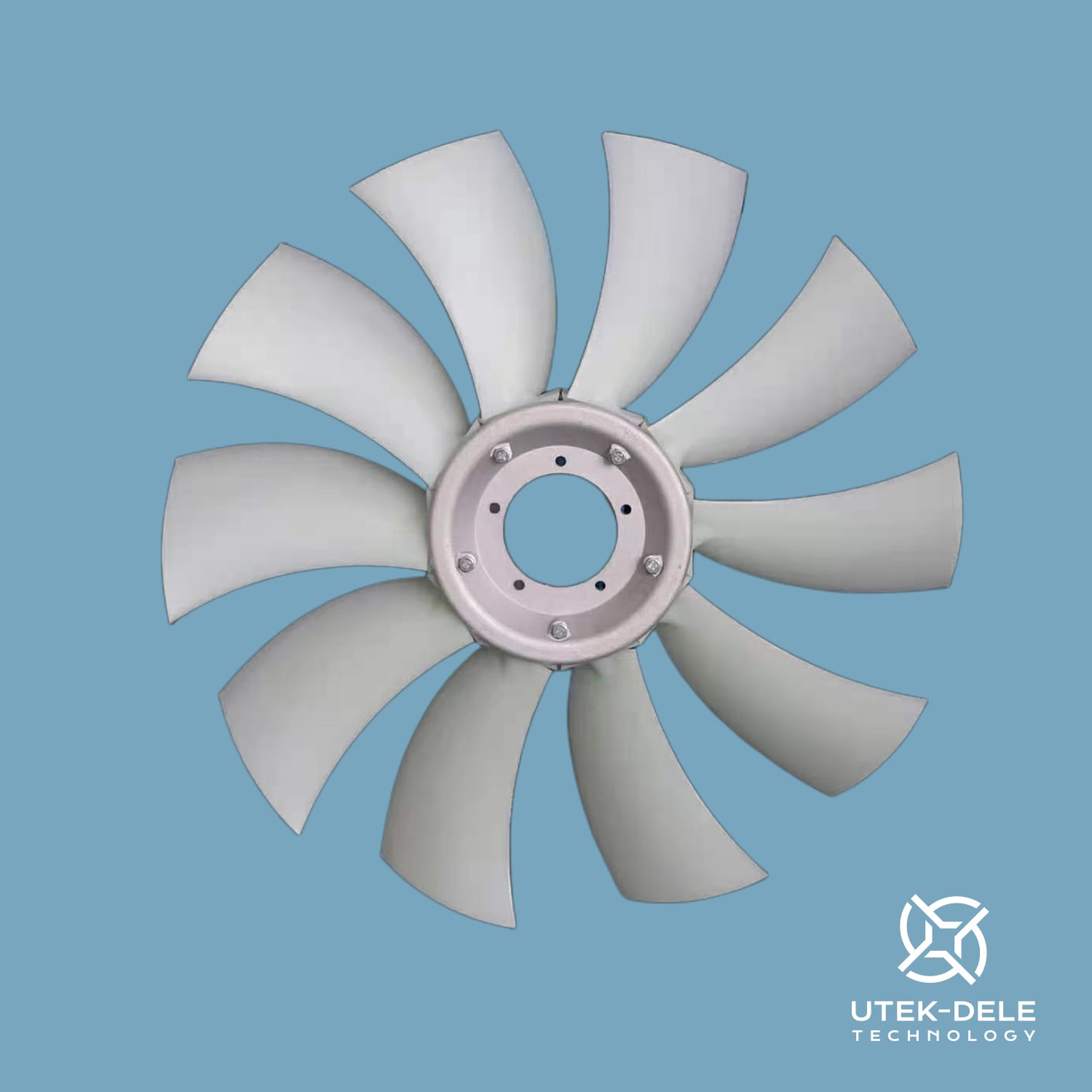
UTEK-DELE P3H is the corresponding replacement family for mapped Multi-Wing 2H and 3H configurations. For a maintenance order, begin by identifying the complete assembly installed on the machine. A code associated with a blade profile can identify one part of that assembly while leaving its diameter, hub connection, installed blade count, pitch and duty to be confirmed. This guide helps a buyer turn either reference into an order for a configured P3H axial fan impeller. It also explains what evidence is needed when the buyer wants only a blade.
The two original references lead to the same UTEK-DELE product family. Keep the identity of the original reference on the request so that the configuration review remains traceable. A buyer replacing a 2H assembly should keep its own drawing, photographs and dimensions attached to the order. A buyer with a 3H reference should use the information for that assembly. This preserves the detail needed to issue the correct P3H drawing for each case. The axial fan blade replacement cross-reference provides a broader index for buyers who have a different reference code.
What can a profile code tell you?
A profile code can help identify a blade family. It is a starting point for identifying the configuration used on the machine. When a supplier quotes a complete impeller, the drawing has to resolve additional details: how the hub attaches, how far the blades project from the mounting surface and how the impeller sits in the available envelope. Where the original order included rotation or pitch codes, keep the full string. If the drawing or model suffix is missing, record that information as unknown and request it or confirm it on the installed equipment through the approved inspection procedure.
Use at least two independent identifiers where practical. A readable plate, a previous purchase record and a part drawing can answer different questions. A plate may identify the assembly but omit dimensions. An old order may describe a variant that was later replaced. A current photograph can show the mounting arrangement, though it rarely gives a reliable pitch angle or bore measurement on its own. Keep the evidence together and use the same machine identity on every attachment. If the records disagree, resolve the discrepancy before approving the supplier drawing.
Why keep 2H and 3H as separate lines in the request?
The P3H mapping helps route both enquiries to the right replacement family. The actual configurations still need separate checks. When a plant has several similar machines, it is easy to group them under one purchasing description while overlooking different axial offsets, blade counts or rotation conventions. Record the original equipment and assembly identity for each line. If the current drawings show that two lines can share a replacement, the plant can consolidate them after the evidence has been reviewed. Grouping them earlier can obscure the very dimension the supplier needs to confirm.
The same discipline helps if maintenance receives a loose sample from stores. Tie the sample to an equipment identifier before using it as evidence. A loose blade might have come from a different assembly or a prior revision. Photograph both faces and the root or attachment detail as part of the identification package. Include a scale only where it helps the supplier orient the view. Use a controlled drawing or measurements taken by the responsible maintenance team to set the dimensions for an order.
| Original reference | UTEK-DELE replacement family | Evidence needed for order |
|---|---|---|
| Multi-Wing 2H | P3H for a corresponding assembly configuration | Original marking and current mounting, rotation, envelope and duty |
| Multi-Wing 3H | P3H for a corresponding assembly configuration | Record the actual 3H assembly separately and review its drawing |
| Blade-only request | P3H blade subject to a separate compatibility review | Retained hub identity, blade attachment drawings, compatibility decision and required checks |
When is a complete impeller the practical starting point?
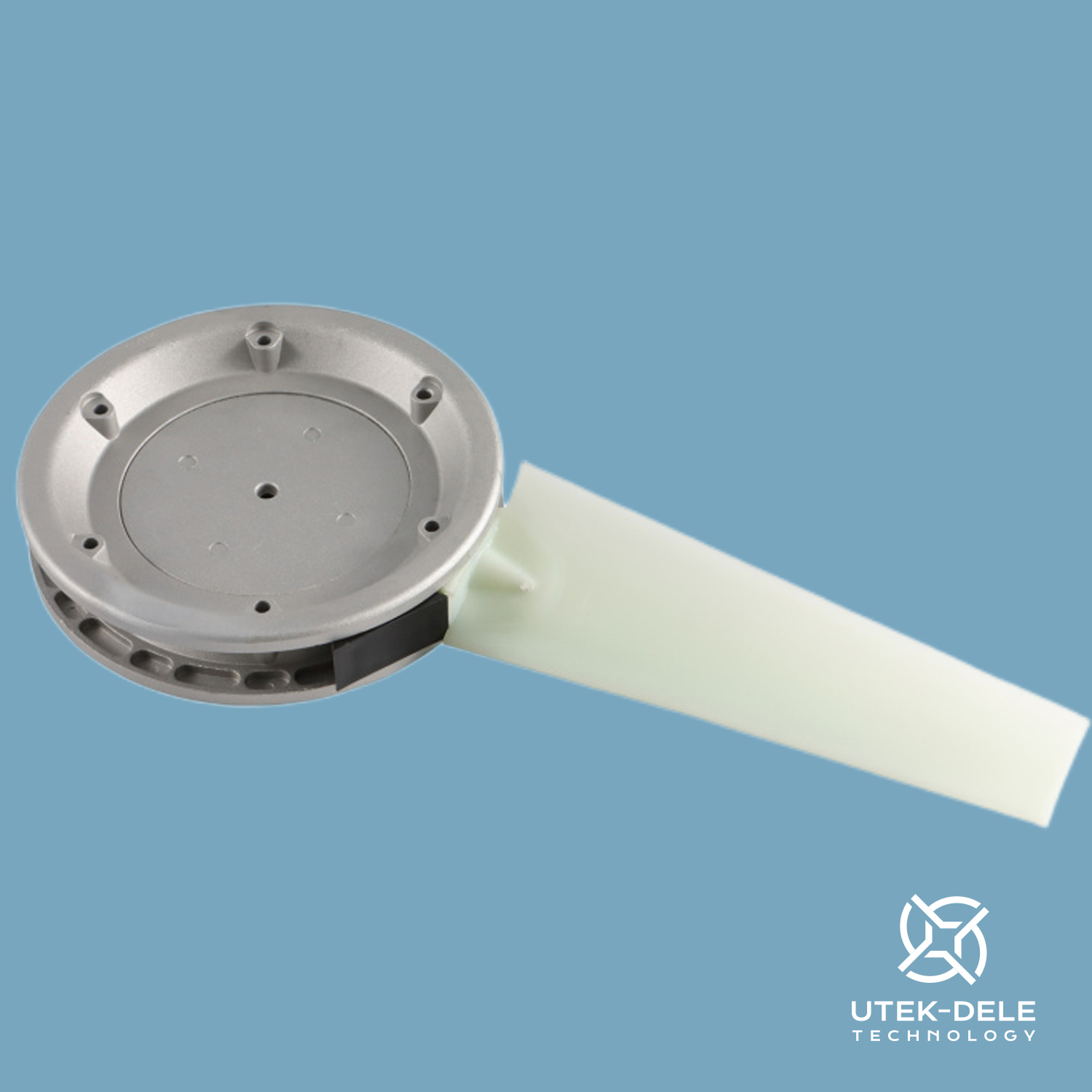
Request a complete P3H impeller when the original hub interface cannot be confirmed for loose-blade use, when the existing assembly is damaged, or when the plant wants a defined replacement drawing covering both hub and blades. In a complete-assembly route the supplier can specify the configuration and its connection to the machine as one scope. The buyer can then compare the outside envelope and machine-side mounting details against the original installation. This is useful when part identification is incomplete but the mounting and duty information can be established from reliable records.
A blade-only request has a different evidence burden. It requires the actual blade-to-hub connection, seating geometry, retention details and the compatibility of the resulting assembly. If one of these is unresolved, ask for engineering confirmation or evaluate the complete impeller. A blade that can be offered up to a hub still requires the compatibility checks applicable to that assembly. Keep the order clearly marked as a complete-impeller enquiry or a component enquiry so that a price comparison does not mix two different scopes.
Which information should travel with every enquiry?
Collect the original model string, machine or unit identification, a drawing if available, and photographs taken from a stated side. Include the dimensions of the machine-side connection and the available clearance. Record the rotation and airflow directions using explicit references. Add the duty point or the operating information the plant already has. State whether the intended replacement will run in the same system or whether the equipment has been modified. Give the supplier the configuration to match before asking for a unit price.
Separate measured information from information inferred from a photo or name. Mark a dimension as drawing value, confirmed field measurement or pending confirmation. Keep a reference to the drawing revision or measurement record beside each critical entry. This gives the engineer enough context to decide what can be copied onto the new drawing. It also gives a purchasing team a clear basis for deciding which parts of an offer can be accepted and which need a revised response.
Compare the physical assembly against the machine
Establish one mounting datum
Ask for a section or dimensioned view through the mounting connection. A useful view identifies the mounting face and the position of the blade sweep relative to that face. It also shows the bore, flange, key or other drive interface when present. Confirm the direction of each offset from the chosen face. If the old and proposed drawings measure from different faces, translate both to one datum before comparing them. A listed offset becomes useful only when the two drawings agree on the zero point and the positive direction.
Include the part of the drive or support that constrains the fit. A center bore dimension by itself does not describe shaft engagement, key location, retaining hardware or the relationship to the nearest shoulder. In a flanged build, the bolt pattern and centering features may matter alongside the diameter. If the existing fit depends on an adapter or a spacer, identify that part and whether it stays in the replacement scope. Include its orientation and position in the assembly record when those details affect the fit.
Make a simple fit table with one row per required interface and a column for the original, the proposed and the evidence. For example, put the axial position of the blade envelope in one row and the position of the hub mounting face in another. If the current machine has a drawing and the proposed assembly has a different reference plane, include the drawing views used in the comparison. The reviewer can then see where a mismatch comes from instead of comparing isolated values taken from unrelated views.
| Feature | Record from original | Review on proposed assembly |
|---|---|---|
| Mounting face | View, face and measurement direction | Same datum or a documented conversion |
| Hub connection | Bore, retention or flange and other interface details | Dimensions and applicable tolerances on offered drawing |
| Axial envelope | Sweep location relative to face; nearby guards and shroud | Full occupied envelope at the installed position |
| Radial envelope | Outside sweep and local clearance requirements | Proposed sweep and approved installation clearances |
| Direction | Viewing side and rotation arrow; separate airflow arrow | Drawing uses the same view and convention |
Check the rotating envelope and nearby parts
The sweep diameter gives the size of the rotating circle. The assembly also occupies space along its axis. A proposed impeller can match the nominal outside diameter while placing the leading or trailing portions of the blade in a different axial position. Review the shroud, guard and other nearby parts against the approved envelope and mounting datum. Where a housing is tapered or has a stepped opening, the clearance question depends on where the blades sit in the opening as well as the nominal diameter. Ask for a view that shows the relationship directly.
Treat clearance as a drawing and verification question, using the approved measurement points and requirements for the actual machine. For a unit that has been repaired, measure or confirm the current configuration rather than relying exclusively on an old catalog sketch. Identify changes in motor support, shroud position or spacer thickness that can affect the available space. Supply those records with the order so the supplier can review the proposed geometry against the installation that actually exists.
If a fit discrepancy is discovered during a drawing review, describe it in the terms of the relevant interface. For example, record whether the blade sweep is too close to a guard because of an axial shift, or because the radial envelope changes at that station. A discrepancy stated as “the fan is too large” gives the drawing reviewer few clues about which feature is at issue. A sketch with the interfering surfaces and the referenced datum can turn the finding into a specific revision request.
Distinguish rotation from airflow direction
Clockwise and counterclockwise need a viewing side. Put the viewing side and rotation arrow on the same view. Record the intended airflow as a separate arrow through the equipment. This matters when two maintenance notes use opposite viewpoints or when the drawing is read from the motor side by one team and from the inlet side by another. A photograph of the plate with a separate image of the mounting arrangement can help reconcile the viewpoints. Ask the supplier to repeat both arrows on the proposed assembly drawing.
Review pitch with the same care. Have the supplier specify or confirm the pitch of the ordered configuration on the assembly drawing. The fact that a blade angle appears in one assembly drawing does not make that angle the default for a different machine. Record how the angle is defined and where the reference comes from. If an old service note uses a different convention, share the drawing or diagram with the order rather than converting the value without checking.
| Field | UTEK-DELE P3H family listing | On the order |
|---|---|---|
| Diameter | 173–745 mm | State the actual required sweep |
| Blade count | 5–12 | Verify availability for the specific hub and configuration |
| Hub families | H-6 / H-8 / H-10 | Specify the assembly drawing and the machine connection |
| Material options | PAG, conductive PAGAS, aluminium, with PAGAFR also listed | Confirm the proposed material and the documentation needed for the duty |
| Pitch | Record the supplied blade angle for the selected configuration | Use the drawing’s stated view and reference |


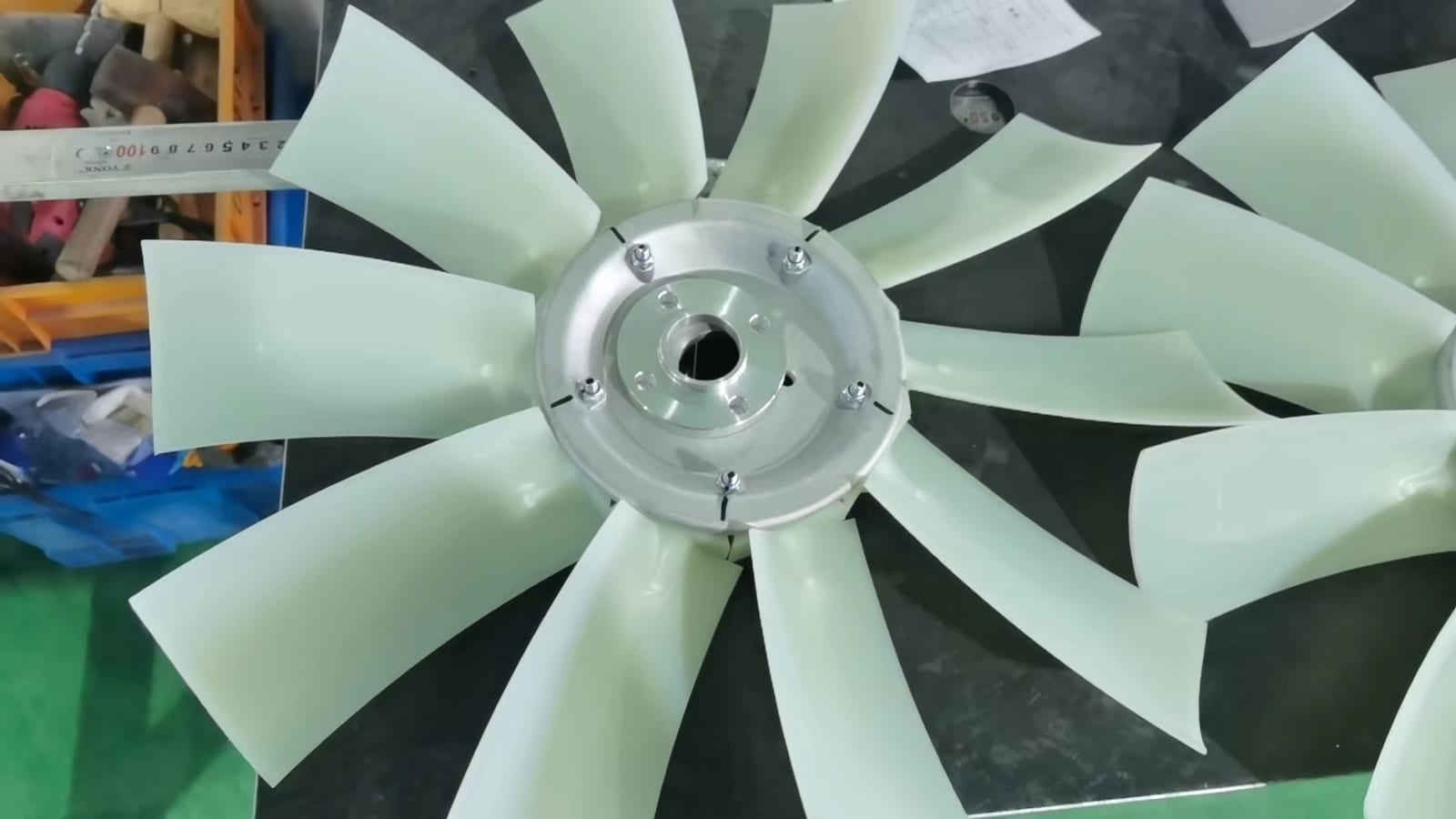
Identify the P3H hub in an assembled example
The H-series video shows a P3H impeller around 0:04. Use that view to identify where the hub meets the machine and which features the supplier should show on the offered drawing.
The clip goes on to show other H-series models. For the P3H replacement, use the labeled assembly drawing to confirm the actual mounting, dimensions and rotation for your equipment.
Walk through two incomplete maintenance requests
Consider an enquiry that contains a photo of an impeller marked 2H, a measured outside diameter and a request for two replacements. The useful first response is a request for the mounting view, the complete assembly marking and the machine identity. Suppose maintenance finds an original drawing, but the drawing shows a spacer that the equipment no longer uses. Note both conditions on the enquiry and ask which condition the proposed assembly should match. The original drawing still helps identify the assembly, while the current mounting information defines the machine-side interface that the replacement has to meet. Keep the removed spacer out of the proposed supply unless the new drawing calls for it.
A second enquiry might arrive as “3H blade” with a close-up of a damaged root. The damage can make the sample a poor guide to the original seating shape. Ask for the retained hub drawing and an intact reference if available. Use the request to decide whether a blade-only compatibility review is possible or whether the assembly should be quoted as a complete P3H. Keep the two quotes distinct if both routes are considered. The complete assembly quote can proceed on confirmed machine-side details while the blade-only review still needs attachment evidence. The purchasing decision should identify which scope the plant has approved before releasing the order.
For either enquiry, put the source of each dimension in the response sheet. A supplier can then mark a field as confirmed, ask about a conflict, or list a specific deviation on the proposed drawing. If the buyer later sends a corrected machine drawing, identify which open issues it resolves. Keep the relevant update in the same record instead of appending it to a separate message without the equipment ID. These examples describe how to handle incomplete enquiries and can be used as practice cases with the purchasing and maintenance teams.
Choose the right supply scope for the replacement
Compare a configured P3H assembly with a blade-only request
A complete assembly order defines the hub and blade configuration together, then matches the machine-side connection and approved duty. It is especially useful where records for the old blade attachment are incomplete, or where the original hub is out of service. A blade-only enquiry starts from a retained hub and needs a complete review of that connection and the resulting rotor. Give both the buyer and the supplier a clear statement of which part remains in service. This makes it possible to compare a complete offer with a complete offer and a component offer with its own conditions.
For a blade-only enquiry, obtain the relevant original and proposed drawings and the applicable evidence for the attachment and fit. Any difference in blade root or geometry has to be evaluated by the responsible engineer. A successful insertion test alone does not provide the engineering evidence needed for use. Keep the scope open for review until those questions are answered. If the plant changes to the complete-impeller route, transfer the confirmed machine-side information to the new request and identify the old hub as outside the replacement scope.
| Decision | Complete configured P3H | Blade-only compatibility enquiry |
|---|---|---|
| What stays on the machine | Equipment-side mounting and interfaces as agreed | Existing hub and other retained assembly components |
| What is supplied | Matched hub and blade configuration per drawing | Specific component if accepted for the retained assembly |
| Primary fit evidence | Machine-side drawing, envelope and duty | Blade root, seating and retention plus remaining assembly checks |
| Release record | Approved complete assembly and drawing revision | Approved component for the defined retained hub and configuration |
Review the offered drawing before comparing the assembly price
Ask for a drawing that identifies the exact offered configuration and shows the features the plant is responsible for checking. A drawing that contains only the product family and outside diameter leaves several critical questions open. Mark whether the proposed assembly retains the machine's existing shaft, spacer or adapter. Where a separate component is shown, state whether it is part of the supplied assembly or remains plant stock. An offer with a different interface may still be worth evaluating, provided that the change and its approval requirements are visible as a separate option.
Create a short list of dimensions that can be checked independently before the assembly is installed. These may include the identified mounting features, the axial position relative to the reference face and the outside sweep. A purchasing inspection record should say which drawing revision applies and who will confirm the machine-side condition. If a dimension can only be checked with the assembly in the equipment, identify the approved method and responsibility in the first-assembly plan. This lets the buyer separate a confirmed delivery dimension from a fit question that has to be resolved in the actual installation.
Keep nearby H-series product identities clear
The S14H axial fan impeller and S16H axial fan impeller are separate UTEK-DELE product references. They can help a buyer recognise why model identity matters when an inventory list simply describes everything as an H-series fan. Use them as references when the original marking points to a different family or when the plant needs to request a fresh configuration review. A 2H or 3H replacement request should carry its P3H mapping and the details for its own installation. Assign a new configuration review if a different model is proposed.
For a different example of replacement scope, the 5W complete-impeller guide explains why a W-series reference is handled as its own complete-impeller question. The P3H article gives a different decision point: buyers may come with a loose blade or a full assembly and need to identify which request the available evidence can support. The purchasing record should state whether the old hub is retained and which machine-side dimensions carry over. That statement prevents a generic “fan replacement” request from turning into a price comparison between unlike items.
Record material and operating constraints together
Select a blade material using the application and the offered configuration. State any restrictions relevant to the duty, such as temperature, exposure, material requirements or other project-specific conditions the engineering team has identified. Confirm material on the order drawing or supplier response, because a product family can have different material options across configurations. If a replacement needs a specific compound or special property, ask for the precise material designation and documentation for that requirement. Keep the material requirement separate from assumptions based on color or surface appearance.
Use a condition record for unusual service. An application may have repeated starts, contaminated intake air, seasonal temperature changes or a modified drive. State the conditions the plant can verify and distinguish them from provisional estimates. Where operating information is missing, provide the equipment model and the applicable existing documents, then request a review of what is still required. This keeps a material or duty assumption from being accepted simply because the assembly looks similar to the removed one.
Compare operating conditions on the same basis
Bring the actual duty into the quotation
Where available, state the required airflow, pressure basis, operating speed and relevant system conditions. Confirm whether a quoted pressure is static or total and whether a quoted operating point relates to the installed arrangement. A fan curve from a different configuration does not answer every question about the replacement. Use the plant’s available operating record to explain what the replacement must do. If the data are incomplete, state which values are measured, which come from original documents and which need to be resolved before release.
A buyer can often provide useful context even without a complete test report. The equipment model, motor or drive information, current arrangement and the intended airflow direction give the supplier a starting point. If the process has changed, note what changed and when. A replacement for the same machine after a restriction or guard has been added should be reviewed against the current installation. Bring the responsible person into the comparison before treating a mechanical match as a complete duty decision.
For close comparisons, write the duty conditions on both sides of the worksheet. Include speed and measurement convention. Keep missing information visible as an open question. If the plant has data from different seasons or operating states, name the state used for the comparison rather than combining the most favorable readings. A like-for-like comparison supports the decision to proceed with a sample or to request additional evidence. It also reduces the risk of accepting a performance statement that refers to another installation.
| Question | Record when available | If information is missing |
|---|---|---|
| How much air is required? | Airflow, units and operating condition | Provide equipment function and confirmed original documents |
| Against what resistance? | Pressure value and static or total basis | Ask the engineer which pressure basis applies |
| At what speed? | Actual operating speed and drive information | Share motor or drive record and flag speed for confirmation |
| What changed? | Guard, shroud, air path, drive or application changes | Confirm actual installation before relying on old assembly data |
Handle two machines with similar impellers and different duties
Imagine two units use the same nominal impeller diameter and have similar nameplate markings. One has the original shroud, while the other has a new guard and has been operated at a different speed. Keep separate records for the two units until their operating requirements and proposed configurations have been reviewed. Send the common geometry once where it genuinely applies and provide a distinct duty line for each unit. Ask which assumptions the supplier used in the offered configuration. If both can ultimately share a part number, retain the approval basis for each machine so the next buyer can understand why.
The opposite situation can also occur. A plant may have two physically different assemblies that need to meet the same process requirement. In that case the duty data may be shared, while the mounting details and envelope must remain separate. Put the differences on the same comparison sheet so that an engineer can review the relationship between the proposed assembly and the actual equipment. The agreed configuration may differ by machine even when both support the same process. A well-written offer states which assembly and drawing it applies to instead of describing the result only at product-family level.
Agree what the first assembly must prove
For a first assembly, decide what the inspection and trial will establish before placing the order. Fit inspection can address mounting and clearance. A rotation and airflow check confirms the specified orientation under the approved procedure. Operating checks should use the conditions and acceptance criteria agreed for the machine. Assign the responsibility for each step and define what evidence will be retained. Use the approved manufacturer and site instructions for the equipment and verification; agree any necessary checks with the responsible engineer.
If there is an issue in the trial, separate what was observed from the proposed cause. A reported noise, a clearance concern and a difference in airflow are distinct findings. Record the equipment condition and the configuration installed when the observation was made. It may take a drawing review or additional measurements to identify the cause. Ask the responsible team to decide whether the trial can continue, whether the assembly must be held or whether a revised part or test is needed. Capture the disposition by drawing and assembly ID so that it applies to the right configuration.
Avoid common purchasing errors
- Ordering a profile code as a complete assembly. Add the actual mounting and configuration information.
- Comparing diameter without axial position. Put the blade sweep and mounting face in the same drawing view.
- Writing a rotation direction without a viewing side. Record the view and airflow separately.
- Treating an inserted blade as an approved assembly. Review the retained hub and the complete resulting configuration.
- Combining distinct 2H and 3H enquiries before checking the equipment. Keep the original references attached to each line.
These errors often share a common source: a short product description has taken the place of a configuration record. Correcting the record early can simplify quoting and provide a stable baseline for repeat orders. If the buyer has several similar assemblies, keep photographs and dimensions together by equipment identity. If a proposed change affects the mounting or duty, route it through the same drawing and release process instead of treating it as a routine price revision.
Prepare the enquiry, sample and repeat order
Send a complete RFQ package
- Identify the original 2H or 3H assembly and the specific machine. Attach the complete marking and the best available drawing.
- Select the enquiry scope. Specify a complete P3H impeller or ask for a separate compatibility review of a blade and retained hub.
- Compare mounting, envelope, pitch reference, rotation and airflow on one marked drawing. Record any dimensions that still need confirmation.
- Provide the duty information, material requirements, quantity and first-assembly review criteria.
- Approve the offered configuration and record the final drawing revision, the supplier’s scope and the evidence used for release.
Use these steps to make a request that the supplier can answer line by line. A supplier response should identify the offered model, describe the complete supply scope and identify any unresolved issue. When a drawing is required for approval, place that approval ahead of the production release. If the supplier offers another assembly configuration, record it as a separate option with the basis for reviewing it. This makes it clear which offer corresponds to the confirmed 2H or 3H installation and which offer is a different engineering proposal.
Review the quotation against the actual scope. Ask whether the price covers a fully configured impeller, included interfaces or adapters if any, the agreed documentation and the trial quantities. Confirm the commercial terms on the quote. An offer for a sample may use a different schedule or commercial arrangement from a recurring order. Keep the first-assembly review and the production requirements separate until the relevant evidence has been accepted. Ask for explicit comments where a dimension or requirement cannot be confirmed from the information provided.
Close the first order with a repeatable record
When the first assembly is accepted, keep the approved drawing, configuration and inspection evidence together. Link the record to the original reference code and the actual installed machine. Include the accepted mounting and rotation conventions and any relevant duty basis. If multiple machine variants use related assemblies, give each approved configuration a distinct record. A clear revision and assembly ID are especially useful when the plant places a reorder months after the first trial or when another buyer inherits the job.
Before reordering, check whether the machine, assembly requirements or supplied configuration have changed. A motor change, new guard, revised housing or different duty can affect the review. When there is a change, ask which evidence still applies and which needs to be refreshed. A simple release note can identify the change, approved drawing revision, responsible reviewer and any remaining limitations. This helps purchasing preserve a valid specification rather than reproducing an old order line after the machine has changed.
| Document | What it should contain | Who uses it |
|---|---|---|
| Identification | Original model reference, equipment ID and prior configuration | Buyer and maintenance |
| Accepted drawing | Supply scope, interface, angle, rotation and revision | Supplier and receiving |
| First assembly review | Fit and agreed duty checks, conditions and disposition | Engineering and quality |
| Repeat order | Current configuration, quantity and approved changes | Purchasing and production |
Record the checks a second buyer should be able to repeat
The person who negotiated the first order may remember details that never appeared in the purchase description. Capture them where they can be checked on the next order. For instance, record which view defines rotation and which face was used to measure the axial location. Attach the accepted drawing and confirm whether the original machine had any adapter that remains in service. Include the approved material designation and the relevant duty conditions where those affect the selection. Write the record in terms of actual evidence so that a later buyer can tell which values belong to the released build.
Retain enough information to identify the correct installation if a similar machine is added to the plant. The same equipment family may have different drives, housings or assembly revisions. Before creating a new stock item or combining two existing ones, compare the actual approved records. A revised description should say which machines are covered, what the supplier has agreed to provide and whether there are restricted uses. If maintenance makes a change after the order is approved, flag the affected configuration for review before the next shipment.
Frequently Asked Questions
Is P3H the replacement family for both 2H and 3H?
Yes. UTEK-DELE maps both original references to P3H for the corresponding configurations. Keep the original code and equipment details on the request so that the replacement assembly is configured for the right installation. Confirm the mounting, envelope, rotation, blade arrangement and duty on the proposed drawing or order record.
Can I order a P3H blade for the existing hub?
Ask for a separate blade-only compatibility review with the relevant drawings and attachment details. The review needs to address the retained hub, the proposed blade and the conditions for the resulting assembly. When the required evidence is incomplete, a complete configured impeller gives the buyer a clearly defined assembly to evaluate against the machine.
Does a matching diameter confirm a replacement?
Diameter establishes the sweep size. Check mounting geometry, axial position, nearby clearances, rotation and the operating requirement as well. Compare the original and proposed assemblies from the same reference face so that changes in offset or blade position are visible on the drawing.
What if I only have a worn or damaged sample?
Photograph the sample, its markings, both faces and the attachment area, and connect it to the actual machine. Use the original drawing or confirmed equipment measurements wherever the damaged sample cannot provide a reliable reference. Ask the supplier which dimensions or records are still needed before they can issue a proposed assembly drawing.
How should I describe clockwise rotation?
State the viewing side together with the direction, and include an arrow on a drawing where possible. Show the desired airflow as a separate arrow. Ask the supplier to use the same viewpoint and arrows on the proposed configuration so that the plant and supplier are reviewing the same condition.
What is the most useful first-assembly record?
Keep the approved drawing, the ordered configuration, the equipment identity, the fit inspection and the agreed operating evidence. Record the disposition of any differences and who approved the assembly for use. This makes it possible to repeat the same order and to recognise when a new machine configuration needs a separate review.
Can the two original references be combined into one purchase line?
Keep them separate until the released drawings and installation records show that the approved replacement configuration is the same. Where they can be consolidated, retain the link to both machine identities and their approval records. If they use different interfaces or duties, keep separate P3H order lines.
Which documents help when airflow or pressure data are missing?
Provide the equipment model, available original documents, the motor or drive information and the details of the current installation. Include any recent modifications and identify the intended airflow direction. Ask what additional evidence is needed for the duty review before the final configuration is released.
Final Thoughts
Start with the original 2H or 3H identity, then specify the corresponding P3H assembly against the actual mounting and operating requirements. Use the same datum for both drawings, distinguish a complete assembly from a loose component, and keep the first-assembly evidence tied to the approved configuration. The UTEK-DELE technical sales team can review a request that includes the original code, the machine-side drawing, the rotation and airflow references, and the required quantity. Multi-Wing model names identify the original references for replacement enquiries.
Quality Assurance for Replacement Orders
Keep the approved drawing and the acceptance record with each ordered configuration. The check scope is set by the equipment and order requirements.