Multi-Wing Fan Blade Cross-Reference: UTEK-DELE Candidates
Model cross-reference for axial fan replacement
Reports of higher Multi-Wing quotes in Europe have prompted some buyers to review their alternatives.
UTEK-DELE supplies direct replacements for selected Multi-Wing axial fan blade and impeller models. Use the table below to find the corresponding model and see which replacements are supplied as complete impellers. When requesting a quote, send the original assembly code so we can match the hub, diameter, pitch, rotation and material to the equipment in service.
The distinction that saves the most time is the scope of the replacement. The W-series entries in this guide are for complete assembly review. For other families, first establish whether the equipment documentation permits a blade-set repair or calls for an impeller change. If the approved service scope is unclear, have the equipment owner or design authority resolve it before ordering parts. Retain the incumbent part number and machine identifier on the enquiry so engineering can work from a known configuration.
| Multi-Wing reference | UTEK-DELE replacement model | Ordering scope |
|---|---|---|
| 2H 3H |  | P3H replaces either reference. Specify the original root, retention and pitch. |
| 3Z 4Z 5Z |    | 3Z → P3Z. 4Z → P4Z. 5Z → P5Z. Specify the original pitch, hub and sweep. |
| EMAX4 |  | Corresponding replacement profile. Specify the original configuration on the order. |
| 5W |  | Complete impeller only. Confirm the hub and mounting datum. |
| 6W |  | Complete impeller only. Verify the drive and shroud interfaces. |
| 7W 9W2 |  | 9W2 complete impeller replaces either reference. Specify the installed build code and hub interface. |
| PMAX3 |  | Complete impeller only. Confirm the modular configuration and inlet arrangement. |
| PMAX6 |  | Complete impeller replacement. Confirm current availability and specify the original hub configuration. |
| 1H |  | Corresponding replacement profile. Specify the original pitch and rotation. |
| 4H |  | Configuration review. S14H is shown. Supply the original drawing to select S14H or S16H. |
| 1Z |  | Corresponding replacement profile. Specify hub, mounting and pitch. |
| 2Z/2Z2 |  | Corresponding replacement profile. Include the full original code and suffix. |
| 7Z |  | Corresponding replacement profile. Include the original build code and drawing revision. |
| 1W |  | Complete impeller only. Confirm sweep, pitch and installed load. |
| 6Z |  | Engineering review. Confirm the interface and approved configuration before quoting a trial. |
| TR11W | TR11W | Engineering enquiry. Confirm the offered reversible configuration and duty in each required direction. |
| 8W |  | Complete impeller only. Check diameter, mounting offset and drive limits. |
What does a cross-reference entry tell me?
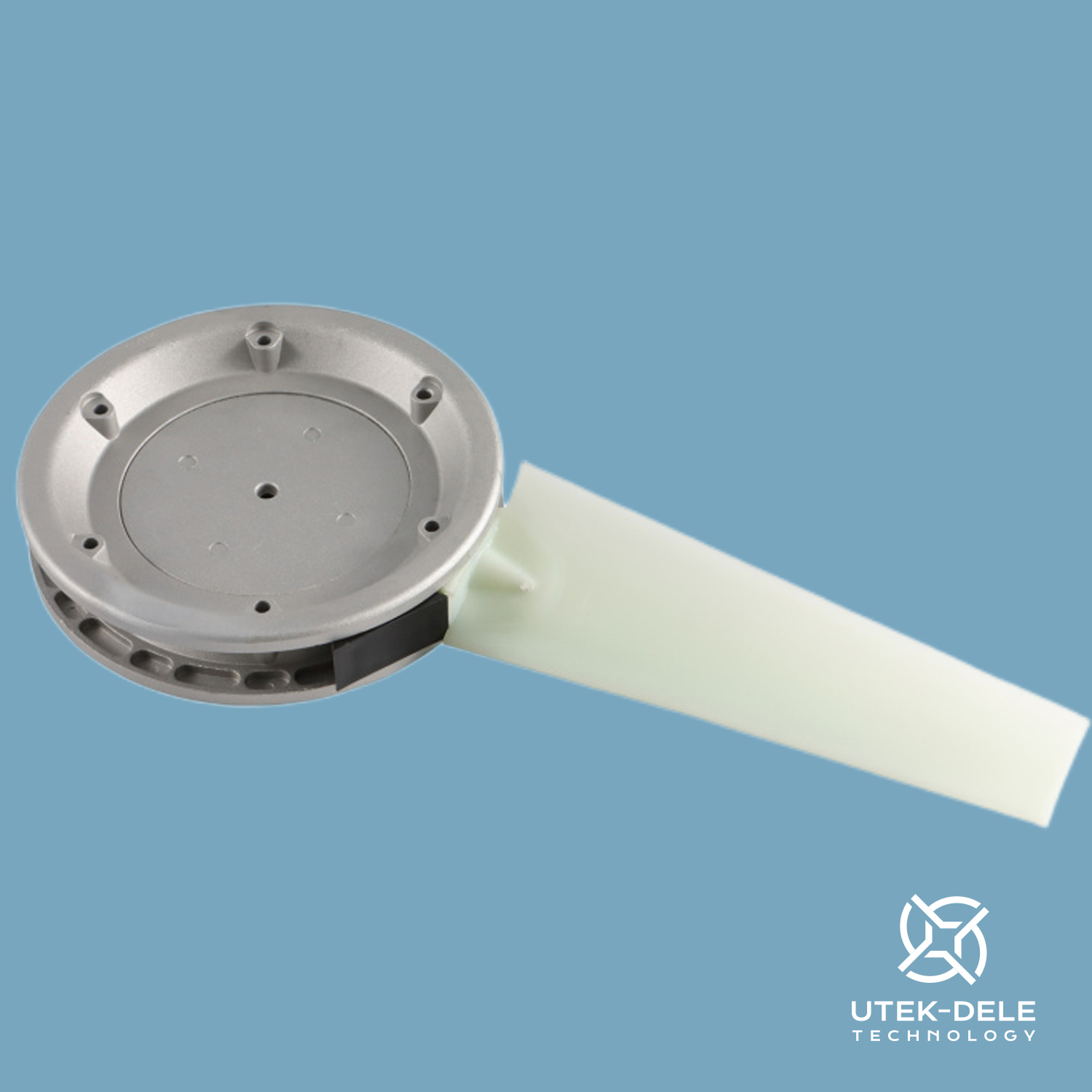
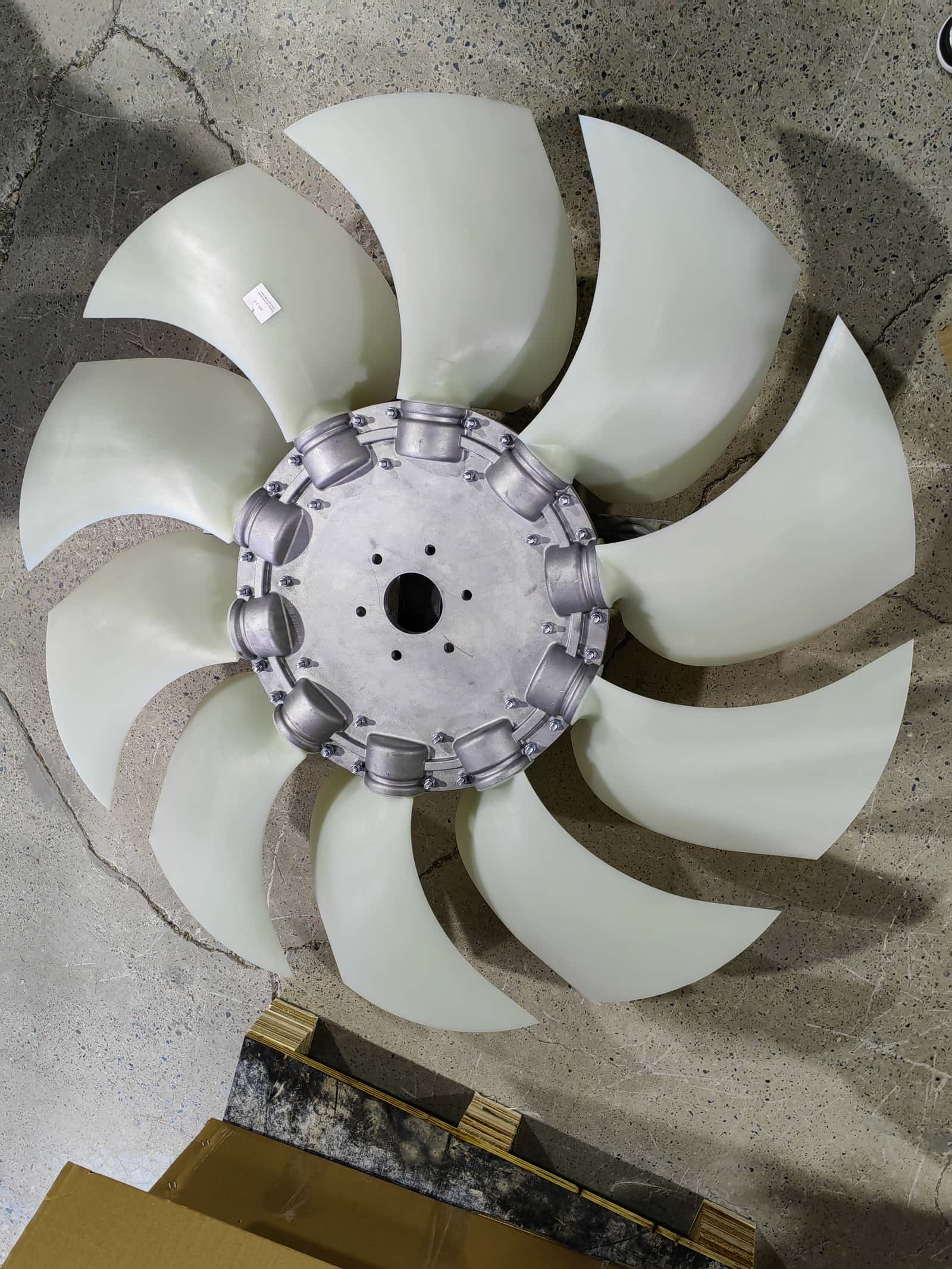
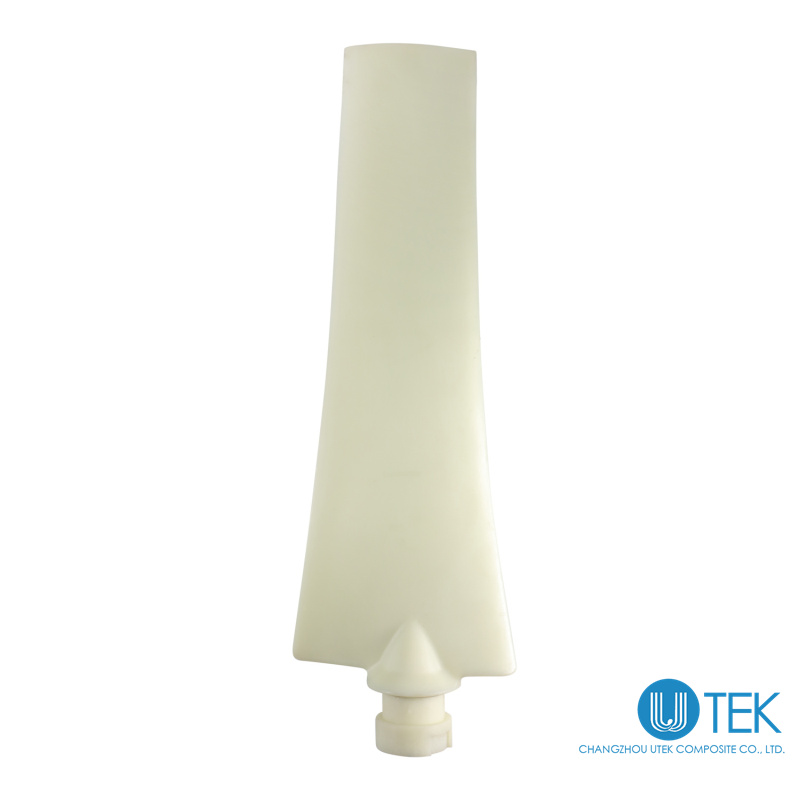
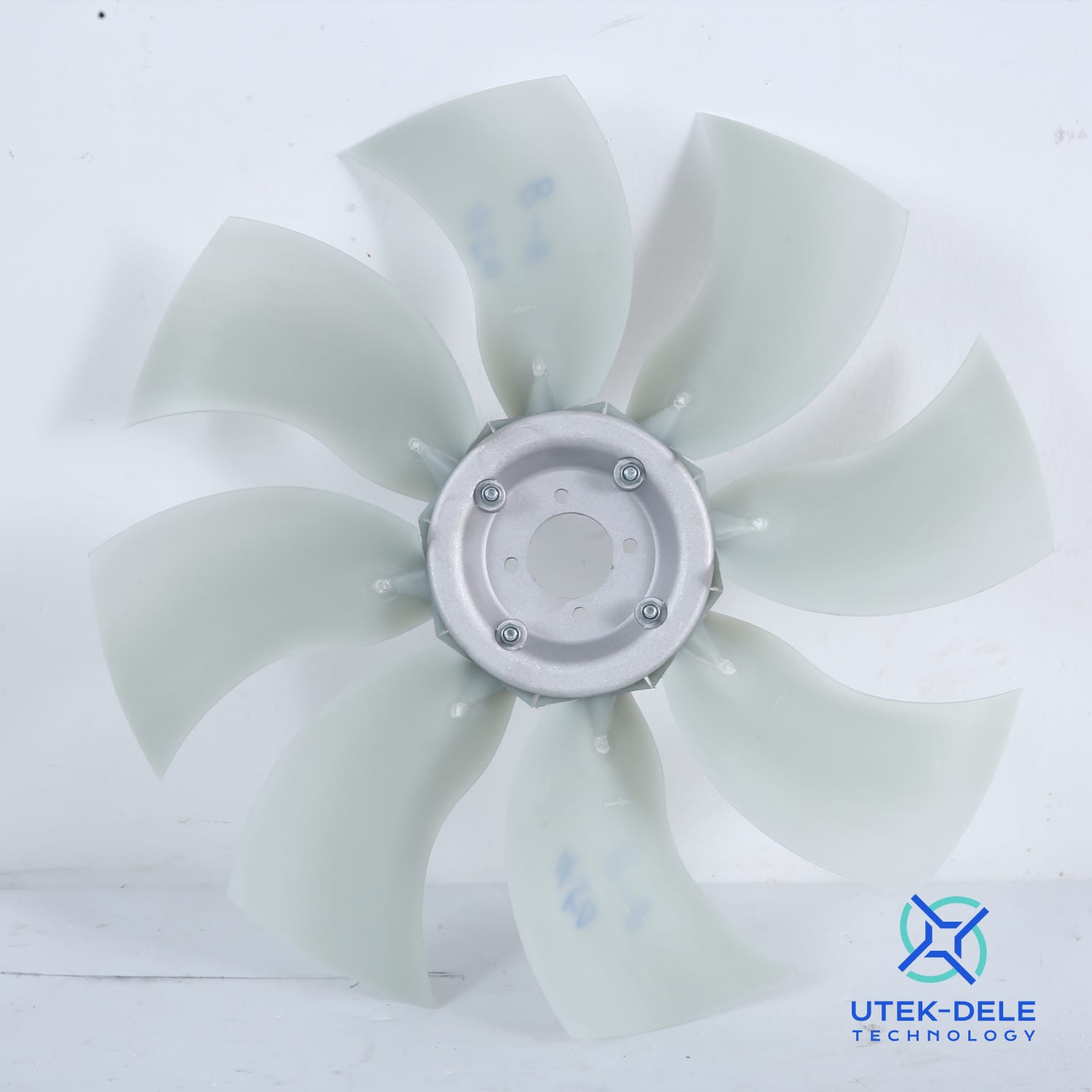
The table gives the UTEK-DELE replacement model and the scope to specify on the order. Start with the Multi-Wing reference and read across to the corresponding product. Where one row covers several reference codes, send the exact code fitted to your machine so the order records the right configuration. Product photographs help identify the profile or assembly. For a complete-impeller replacement, a blade photograph identifies the profile supplied as part of the complete build.
Why does the full impeller code matter?
A maintenance label may carry a short profile designation while a purchase record carries the complete assembly code. Find both when possible. The additional fields can distinguish variants that look similar from the intake side. Record the full code verbatim, preserving punctuation, suffixes and leading digits. If the label is unreadable, include a dimensioned sketch, photos from both sides and the original machine or fan drawing. Mark measured values separately from values taken from the drawing. That makes it possible to resolve an inconsistency without treating a rough field measurement as a released dimension.
When should I request a complete assembly?
Use the complete-assembly path for the W references listed here. The supplier then reviews its blade and hub combination, retention, mounting, set pitch and balancing as one configuration. Capture the position of the mounting face as well as the central bore or pilot. An assembly that centres correctly can still place its leading edge too close to the guard or its trailing edge too close to the heat exchanger. If the new hub requires an adapter or a different fastener stack, treat that as an engineered interface change with its own drawing and release decision.
Why are similar profiles useful to compare?
Profile families help organise an enquiry. An airfoil reference gives the reviewer a way to start with blade section and configuration, whereas a sickle-shaped reference calls attention to sweep, axial envelope and the installation in which the existing fan meets its duty. A reversible configuration introduces a separate question about airflow in each required operating direction. These features help determine what to inspect and measure. Relative noise, airflow, power and service life need comparable data for the complete configurations being considered.
Which differences can stop the review early?
Start with safety-critical constraints that cannot be corrected by a small change in setup. A different retention arrangement, an incompatible bore or pilot, an unapproved rotating mass, inadequate clearance or an unavailable material condition can stop the proposed configuration before a bench run. Rotation has to be recorded from a stated viewing side. A fan viewed from the opposite side appears to turn the other way, so an unqualified clockwise label is not enough for a drawing or a purchase order.
How should I interpret the diameter figures?
Use the installed sweep diameter from a drawing or measurement and compare it with the drawing for the exact candidate assembly. A catalogue range may span multiple hub sizes, blade counts and mounting arrangements. It describes selection scope at the family level. Even when two ranges overlap, the available combinations within that overlap can differ. For a constrained shroud, document where and how the clearances were measured, including any interference at the guard or near structural members. The acceptable values come from the equipment or approved design documentation.
The modular impeller brochure groups 2H and 3H as H airfoil profiles, 3Z through 5Z as Z airfoil profiles, and 7W and 9W2 as separate W airfoil references. Its sickle groups include 1H and 4H as well as 1Z, 2Z2 and 7Z. Those groupings help identify geometry and the relevant family for a drawing request.
The complete ordering code describes the selected impeller configuration. Use it to recover details that a blade profile name alone leaves unspecified, and preserve the configuration when requesting a comparison.
For engine cooling, the reference manufacturer distinguishes modular PMAX configurations from one-piece O-PMAX products. Its selection information differentiates inlet arrangements, including a bellmouth and an orifice plate. When comparing a PMAX3 proposal, identify the configuration and test setup that apply to the quoted unit. These published distinctions are useful for specifying the trial without assuming that similarly named assemblies share a performance curve. PMAX engine-cooling configurations
Multi-Wing references identify the original products. UTEK-DELE supplies its own replacement products independently. Rows marked for configuration review explain which details are needed to select the correct replacement.
What to compare before you select a sample
H and Z replacement models
UTEK-DELE P3H is the corresponding replacement for 2H and 3H, and S1H is the replacement for 1H. Keep the original 2H or 3H designation on the enquiry even though both map to P3H. The full code tells us which root and mounting arrangement, pitch, rotation, material and swept envelope to specify. A service order copied from a previous machine should carry the configuration of the unit in front of you, particularly when the same profile appears on machines with different builds.
For 3Z, 4Z and 5Z references, use the corresponding P3Z, P4Z and P5Z entries to start the enquiry. The shared product page is useful for orientation, but quote requests should state the exact profile under review. A 7Z comparison illustrates another naming issue. The code is the same on the two sides of the table, so a procurement system should keep manufacturer and profile in separate fields. Record which drawing and revision govern the proposed configuration. Resolve the 2Z versus 2Z2 suffix from the original nameplate or purchase record before requesting a selection.
What to inspect on a P-series blade before requesting a drawing
This UTEK-DELE product detail video shows the P4Z, P5Z and P6Z family for visual orientation. Look at the root and blade shape so the photographs you send with the enquiry show the right features.
Use the video to locate features, then measure and document them from an actual part or approved drawing. The clip does not provide dimensions, test curves or a compatibility decision for an incumbent fan.
W assembly and special profiles
W-series replacements are supplied as complete impellers with the hub and full blade complement. Specify the UTEK-DELE 9W2 assembly for the 7W reference and the U10W assembly for the 8W reference. Include the original assembly code and mounting drawing when requesting the quote so the replacement can be specified with the correct pitch, offset and swept envelope. The assembly drawing gives maintenance teams a shared reference for checking the mounting face, drive interface and shroud clearance before installation.
For reversible applications, record whether the machine needs both directions during normal duty or uses a second direction for a limited cleaning operation. Supply the speed and duty information for each required direction. An observed airflow change during cleaning is a different acceptance question from sustained thermal performance during normal operation. For the special profiles listed as candidates, obtain a configuration-specific drawing and availability confirmation before treating a code in the table as an orderable assembly.
Why the same model name can lead to different purchase decisions
The replacement order should identify the scope of the job. A maintenance team replacing an existing unit can use the current assembly drawing as the baseline. If the project also changes the drive, mounting position or air path, record that separately because it changes the installation requirements. Procurement should distinguish a spare for an existing machine from a new configuration for a revised design. That distinction determines which drawing, inspection and approval records belong with the order.
| UTEK-DELE model | Pitch configuration | Listed impeller diameter | Interpretation |
|---|---|---|---|
| P3H | Fixed angle | 173–745 mm | Confirm the diameter and pitch for the exact assembly. |
| 7Z | Adjustable pitch | 560–922 mm | Use the configured pitch, hub and blade count on the drawing. |
| U10W | Adjustable pitch | 1000–2200 mm | Check whether the actual installed sweep falls within the available configuration. |
The range is the published family envelope. Use the U10W product link in the comparison table to review the family, then request a configuration-specific drawing for the installed diameter and the required assembly scope.
| Decision field | Blade-set enquiry where equipment permits it | Complete-impeller enquiry |
|---|---|---|
| What stays in service | The existing hub, drive and machine interfaces. | The machine-side mount, drive and enclosure as defined by the project. |
| Main evidence | Approved blade root, retention and pitch for the existing hub. | Assembly drawing, mount, sweep and balance documentation. |
| Release question | Can the approved assembly be restored within its service scope? | Does the proposed assembly meet the fit and duty required by the machine? |
Which evidence matters on your equipment?
Radiator package with a tight shroud
In an engine bay, the outside diameter is often the first dimension available. Ask for the mounting face to tip plane and the depth of the blade envelope as well. A change in axial position affects how the fan sits in the shroud. Measure the location of the core, guard and nearby frame relative to a common datum. If a replacement proposal shifts the fan to gain clearance at the rear, check what that does to the inlet and whether the mounting arrangement remains within the approved design. An adjustment to the shroud or adapter has a separate cost and should appear in the project scope.
Decide whether the test is intended to protect an established cooling margin or to solve an existing overheating problem. In the first case, recover the approved service requirement and compare the candidate under conditions that represent it. In the second, first check whether fouling, blocked passages, a control issue or air recirculation explains the shortfall. The enquiry should state whether those conditions will be corrected before testing. Otherwise a candidate could be accepted or rejected because the air path changed during the comparison. Use the engine cooling application overview to identify the equipment context that should accompany a radiator enquiry.
Cooling tower with a speed controller
For a cooling tower, document the fan ring and the range of operating speeds used by the controller. Check the duty that the existing fill and air path actually require. A candidate may satisfy the design point on paper while leaving an unresolved question about operation through the rest of the range. Ask the responsible engineer which transitions, stable operating points and service conditions must be evaluated. Record how the test deals with ambient changes that affect comparisons made on different days. If a full seasonal trial is impractical, record what remains untested and who is responsible for that decision.
The mechanical review should identify the blade sweep, drive and hub interface, and any rotating assembly constraints that apply to the equipment. When the fan ring has been repaired or is out of round, record the minimum clearance around the actual circumference instead of using a single nominal drawing diameter. Ask the equipment authority to define how the observed condition will be managed.
Reversible unit used for a cleaning cycle
Separate the primary cooling requirement from the cleaning requirement in the specification. Record how the existing unit changes direction or changes blade setting, which control sequence is in use, and which conditions govern the return to normal cooling. Ask engineering to confirm what the proposed assembly and drive support. A drawing of a reversible blade does not specify whether the rest of a particular machine is approved for the associated operation. The test plan should establish what useful result looks like in each required mode and whether the equipment continues to meet its normal cooling requirement after the cycle.
Where contamination is the issue, record the type and location of the buildup and how cleaning is assessed. A visibly moving dust cloud may show airflow in the cleaning direction, but the useful evidence is whether the affected air path and heat transfer recover to the agreed condition. Define the inspection point and the measures used for that decision. If the application also requires sustained reverse operation, include that as a separate condition with its own duty and limits. Do not infer it from a short purge.
A field note that resolves an ambiguous code
Suppose a service record says only 2Z and a newer catalogue says 2Z2. Photographs and dimensions help, but the most useful additional evidence may be the original purchase order, installed assembly number or approved parts list. Request the suffix, hub and actual blade count as independent fields. Keep the original spelling in the enquiry and label any interpretation as provisional. If the configuration remains uncertain, request a drawing review rather than forcing the code into the closest catalogue entry. This also gives the buyer a clearer answer about which assumptions would have to be resolved before ordering a sample.
Compare the Duty Point Before Comparing the Quote
What must the replacement do on the machine?
Start with the duty that matters to the equipment. For a radiator package, the design question is whether the system can reject the required heat under the relevant ambient temperature and engine load. For a ventilation unit, it may be whether the installed unit delivers the specified airflow through its ductwork, guards and filters. These requirements lead to an airflow and pressure target, a speed range and a power or current constraint. The target belongs to the machine and its installation. A fan diameter, blade count or nameplate photograph cannot supply it on its own.
Ask the equipment owner for an approved operating point and any meaningful secondary conditions. A variable-speed system may spend most of its life at reduced speed yet need to handle peak thermal demand. An air path may have a clean and a service-loaded condition. If the original design data are unavailable, record that gap before setting an acceptance target. A measurement from an existing machine can help characterize its current operation, provided the condition of the fan, heat exchanger and air path is recorded. A damaged or fouled assembly may provide a useful troubleshooting baseline, but copying its present output could preserve an existing cooling problem.
Make the enquiry unambiguous about pressure basis, airflow units, air conditions and rotational speed. A free-air airflow figure cannot establish airflow against a restrictive core. Static pressure and total pressure results also require a common basis before they can be compared. Ask for the curve of the proposed assembly with its documented diameter, hub, blade count, pitch setting, material and rotation. Record whether the curve is measured or estimated and how it relates to the offered build. A curve for a nearby configuration can narrow a search while the supplier prepares configuration-specific evidence. It does not establish acceptance for the quoted part.
How should the two assemblies be bench checked?
Set up a comparison with traceable conditions. Record the fixture, guard or shroud arrangement, air direction, instrument positions and how the pressure and airflow were measured. Record actual shaft speed rather than inferring it from the controller command. Keep the as-tested configuration attached to every result. If a representative cooling pack is part of the bench setup, record the condition of the core and the state of any louvers or restrictions. A test on an isolated fan helps evaluate the fan itself. A check with representative obstructions and clearances helps expose installation effects that an isolated curve cannot show.
Compare airflow and pressure together, then review input demand, vibration and acoustic observations against the machine owner's criteria. Where electric current is tracked, retain the relevant supply and control conditions. Where sound is evaluated, document the method, microphone location, speed and operating point. A sound observation taken during a low-load run cannot answer a requirement at full cooling demand. Treat changes in inlet clearance, obstructions or support structure as test variables that can influence the result. Compare runs only after explaining meaningful differences in conditions.
Plan the installed check as a separate step. Use the equipment owner's approved test procedure and a guarded arrangement operated by qualified personnel. Check relevant operating states, including transitions where the control changes speed or demand. Include thermal behavior, available drive capacity, clearances under operation and any unusual sound or vibration. If a candidate only satisfies a subset of the acceptance criteria, record the failed condition and decide whether an approved configuration change can address it. Keep the result linked to the exact tested build so a later change in blade material, pitch or hub cannot silently inherit the evidence.
Five Failure Modes That Can Invalidate a Model Match
1. Selecting by similar model codes
An identifier may refer to a profile, a blade size or an assembly family. The same characters in two suppliers' catalogues carry no engineering meaning by themselves. First locate the actual label, drawing or part revision and establish what it identifies. Then compare the interface, assembled envelope and duty point. If a label is damaged or missing, mark the reference as unidentified and request usable photographs or measurements. Replacing a missing character with an educated guess can send the quote toward a different root, hub or size.
2. Assuming rotation from a photo of the blade
A photograph can help show sweep and geometry. It may have been taken from the opposite side, or the original machine may specify rotation from a different viewpoint. Give the supplier a clearly marked reference face and an airflow arrow. Record the direction of rotation when viewed from that face and confirm the intended air path in the equipment. For a configured assembly, verify the proposed blade orientation and setting against the assembly drawing before installation. A verbal clockwise description with no reference face leaves a material ambiguity.
3. Checking only the outer diameter
The swept diameter addresses only part of the clearance problem. An assembly can fit the opening and still have a hub offset or blade envelope that conflicts with the core, guard or nearby structure. Ask for dimensions referenced to the mounting face so that the proposed drawing can be overlaid on the existing installation. Check the required envelope with the approved setup for the machine, including any operating movement the equipment owner specifies. Do not infer permitted clearances from a convenient static measurement.
4. Treating a blade as a universally compatible spare
Even when two profiles appear similar, the blade root, retention geometry and hub condition can decide whether blade-only service is an option. The matching questions also include the material, pitch, mass distribution and assembled balance of the approved build. Do not mix unapproved blades or suppliers' components in one rotating assembly. If a blade-only configuration lacks documented approval for the existing hub, ask whether a matched impeller can be evaluated. That route shifts the verification to the full assembly and the machine-side interface.
5. Approving the first unit on fit alone
A trial that mounts cleanly can still miss cooling demand or impose an unacceptable load on the drive. A brief unloaded run can miss a vibration issue at another speed. Set the acceptance criteria with the equipment owner before the test and document the result at each relevant condition. If fit passes but a duty point fails, keep the candidate open for engineering review instead of releasing it through procurement. The relevant question is whether the documented build serves the machine throughout its approved operating envelope.
Move From a First Article to a Repeatable Supply Part
What belongs in a first-article record?
Keep the acceptance file short enough that maintenance, engineering and procurement will actually use it. Start with the original assembly identity and the proposed supplier part number, drawing revision and build configuration. Attach installation dimensions and clear images showing where critical measurements were taken. Record materials and components by their approved identifiers. Keep tolerances and fastener requirements in the applicable controlled drawings and service instructions. A generic blog checklist cannot supply machine-specific assembly values.
Give each acceptance check a traceable result, the condition in which it was taken and the person responsible for disposition. Mark fit, duty, drive load and installation behavior separately. If the first trial reveals an interference point, describe where the interference occurred and at what condition it was observed. If a different pitch or hub is proposed, capture that as a new configuration and identify which checks need to be repeated. Keep a place for unresolved items, such as a missing hot-condition check or a material declaration still awaiting review. An unchecked field and an acceptable result need distinct labels.
What does procurement need after engineering approval?
Send the purchase order with the approved build reference, its revision and the documentation the supplier has agreed to provide. The description should identify whether the order covers blades, a complete impeller or a configured assembly with interface hardware. Clarify what arrives assembled and what is the responsibility of the installer. Agree on traceability and on how any proposed change in material, mould, hub, assembly method or sourcing will be communicated before supply. This is where a substitution stops being a search result and becomes a repeatable procurement item.
For a repeat order, compare the delivery paperwork and item markings against the approved build. Keep acceptance evidence accessible to maintenance so a future service order can use the same configuration. If the supplier offers a revised or substitute item later, evaluate the change against the dimensions, duty and release criteria that mattered on the first article. A current quote, lead time and unit price are useful commercial inputs once the build scope is clear. Compare them alongside qualification effort, spare availability and the consequences of a mismatch. A low quotation for a blade and a quotation for a balanced assembly may cover very different work.
A practical release sequence
- Record the current part identity, its application and the specific problem the replacement is intended to solve.
- Request an identifiable candidate build and a drawing that covers its machine-side interface and swept envelope.
- Agree on the configuration, test scope and acceptance criteria with the equipment owner before ordering the evaluation unit.
- Inspect the first article against the approved drawing, then run the agreed bench and installed checks using the approved procedure.
- Review unresolved results before authorizing repeat orders. Document any permitted change and recheck the conditions that it can affect.
- Release the approved configuration with its revision, traceability records and supplier change-control arrangements.
Comparing quotes for the same engineering scope
If a new quote has prompted you to consider a second source, give each supplier the same equipment reference, operating requirements and delivery scope. A useful quote comparison starts with the item you would actually receive. A blade set, a balanced impeller with hub and a complete fan with drive or housing are different purchasing scopes. Identify which parts and services are included, which existing parts the proposal assumes you will retain, and which interfaces require approval. Multi-Wing's ordering code is a useful starting point for identifying the configuration in service. A photo of a blade or a diameter on a nameplate may help find the right drawing, but the purchase request should also identify the equipment and the assembly revision.
Build one request around the duty and interface
Give each supplier the operating point as an airflow and a pressure, with units and the pressure convention used. Include speed, air temperature or density, and the operating range if a controller varies speed. Document the equipment type and installed geometry. On a radiator assembly, for example, record the core and shroud arrangement and what is upstream and downstream of the fan. On a cooling tower, identify the fan ring, available clearance and actual speed range. State the airflow and rotation directions with a viewing side. When the incumbent has been modified, mark the difference between the recorded configuration and what is installed.
Ask each supplier to show the proposed assembly at the requested point on its curve. Record the diameter, speed, blade count, pitch, material, inlet and outlet setup and density represented by the data. Label the power figure by its measurement boundary, such as shaft power or electrical input. An apparently favorable power number may include a different part of the drive train. Sound comparisons also need a common measurement basis and operating point. A fan curve developed in a laboratory is evidence for the tested arrangement. The site review should account for restrictions and inlet or outlet conditions that can change installed performance. ANSI/AMCA 210-25 fan test methods · AMCA Publication 201-23, Fans and Systems
Separate the quote price from the cost of qualification
Put the initial order and repeat orders on separate lines. Record the currency, quantity tier, delivery terms, destination, quote validity and lead time measured from the same milestone. List separately any tooling, sample freight, hub or drive changes, installation work, qualification tests and production inspection charges. When a second source requires a different hub, include the hub and its installation work in the cost of the proposed assembly. When one quote already covers balancing, drawings or test documentation, make that visible before comparing unit prices.
The qualification cost depends on how much of the original assembly remains and which risks the proposed change introduces. Build the comparison with three groups of costs. One-time costs include drawings, samples, fixtures and qualification. Recurring costs include the agreed assembly, delivery and the inspection or documentation required for each lot. Operational costs include planned installation time, spare stock and any measurable energy difference at the equipment's actual duty. For a fair estimate, use a stated volume and time period, keep assumptions visible, and put unresolved cost items in their own column. Add an energy credit only when the power comparison represents the same useful airflow and pressure in a comparable installation and the operating hours are documented.
Frequently asked questions
Can I order a replacement using only the original blade code?
Use the blade code to find the replacement model, then send the full original assembly code with the enquiry. Include the hub, pitch, rotation from a named viewing side, installed diameter and material if they are not clear from the code.
Does P3H replace both 2H and 3H?
Yes. UTEK-DELE P3H is the corresponding replacement for both references. Provide the original configuration so the correct retention, pitch and service scope can be specified on the order.
Can I fit a 9W2 blade on a 7W hub?
Order the UTEK-DELE 9W2 as a complete impeller when replacing a 7W assembly. Provide the original assembly code and mounting details so the full build can be specified for your machine.
Does a common code such as 7Z prove fit?
A common code helps locate the profiles being compared. A fit decision still requires a configuration-level check of the blade root, hub, mounting and swept envelope.
Which reference should I use for 4H?
Request an engineering review using the exact 4H assembly code and drawings. The candidate records require reconciliation before a specific substitute can be proposed.
Can I infer noise or energy savings from the profile?
Compare sound and absorbed power at equivalent service duty using a documented setup. A change of blade shape, material or nominal diameter alone provides insufficient evidence for either saving.
What should I send if the original label is unreadable?
Supply the machine identification, original parts list if available, and photos of the complete impeller from both sides. Include the measured hub and sweep dimensions, viewing side, and required duty so engineering can identify the next check.
What should a quote include for the W series?
Ask for a complete assembly configuration, drawing revision, material, set pitch, direction, mounting interface and scope of supply. Use those fields to compare quotes and to control what is delivered for the trial.
What information makes a first-article test useful?
Define the installed configuration, operating points, instruments and acceptance criteria before the test. Keep the baseline and candidate records together so that a later reviewer can explain any difference in airflow, power, thermal outcome, noise or vibration.
Final Thoughts
Find the UTEK-DELE replacement model in the table and send the complete original code to the UTEK-DELE engineering enquiry team. Include the drawing or a photograph of the label if the code is incomplete. For W entries, request the complete impeller and confirm the machine-side mounting details. For blade-level work, state the equipment's approved service scope. If the machine or duty has changed, include the new operating requirements so the quote addresses the equipment you intend to run.