Axial Fans for Livestock Barn Ventilation: Lightweight, Durable Airflow
Key Concepts in Barn Ventilation at a Glance
What is the operating point?
The operating point is the airflow and pressure achieved where a fan characteristic meets the resistance of the installation. A blade diameter alone does not identify that point. Specify the complete impeller, speed, air condition and inlet and outlet arrangement when requesting performance evidence. A free-air result cannot be substituted for performance through a radiator, filter, louvre or other restriction.
What is a blade material designation?
PAG, PAGAS and ALU identify different material options in the UTEK-DELE knowledge base. They do not identify an airflow rating or a complete fan safety approval. Record the exact blade model, material and hub combination in the enquiry. Chemical exposure, temperature and mechanical loading need their own review; selecting a familiar material abbreviation does not demonstrate suitability for the installed duty.
What does adjustable pitch mean?
Adjustable pitch allows the blade angle to be set for an approved impeller configuration. It does not mean every blade can change pitch while running. Distinguish a manually adjusted assembly from a purpose-designed pneumatic or hydraulic variable-pitch mechanism. Ask for the relevant assembly instructions, permitted combinations and setting procedure before proposing a change to an existing installation.
Why is rotational inertia different from blade weight?
Rotational inertia depends on how mass is distributed around the axis, not just total weight. Starting torque also depends on acceleration time, drive characteristics and aerodynamic load. A lighter component can help handling, but it does not establish a guaranteed faster start or lower bearing wear. Request the assembled impeller data and review the drive duty rather than relying on an imprecise shorthand.
What is a tested configuration?
A tested configuration identifies the impeller geometry, blade count, hub, pitch, speed and test arrangement associated with a result. Changing any of those items can change airflow, absorbed power or acoustic behaviour. Keep the configuration identifier alongside the curve and inspection record. It is particularly important for replacement blades, where a visually similar component may not reproduce the original performance.
Application Requirements and Air Movement
If you are selecting a barn ventilation assembly, start with the requirement that the finished system must satisfy. Barn ventilation depends on the complete fan, air inlets, controls and the resistance of the building. This guide reviews UTEK-DELE blade choices, including PAG’s documented −40 to 110°C material range, without assigning an untested airflow or animal-comfort guarantee.
Why Ventilation Matters in Livestock Barns
Livestock barns — for dairy cows, pigs and poultry — must be ventilated to remove heat, moisture and airborne contaminants. Poor ventilation leads to heat stress, respiratory problems and reduced productivity, which directly affects the health of the animals and the economics of the farm.
Ventilation is provided by fans that move large volumes of air through the barn, and the fan blade is the component that does the actual work. The efficiency, durability and reliability of the blade determine how well and how economically the ventilation system performs.
For a farm that runs around the clock, a ventilation fan is not an occasional tool but a continuous-duty machine, which is why the quality of the blade matters so much in this application.
The Challenges of Livestock Ventilation
Livestock ventilation presents specific challenges. The air is humid and often corrosive, carrying ammonia and dust from the animals and their bedding. The fans run for long hours, and they must start reliably and operate quietly enough not to disturb the animals.
Heat stress is the biggest summer challenge, because animals are sensitive to high temperature and humidity. Effective ventilation moves hot, humid air out and draws cooler air in, keeping the barn within a comfortable range.
These conditions place real demands on the fan blade — it must be durable in a corrosive environment, efficient at moving air, and reliable over thousands of hours of operation.
The Role of the Axial Fan Blade
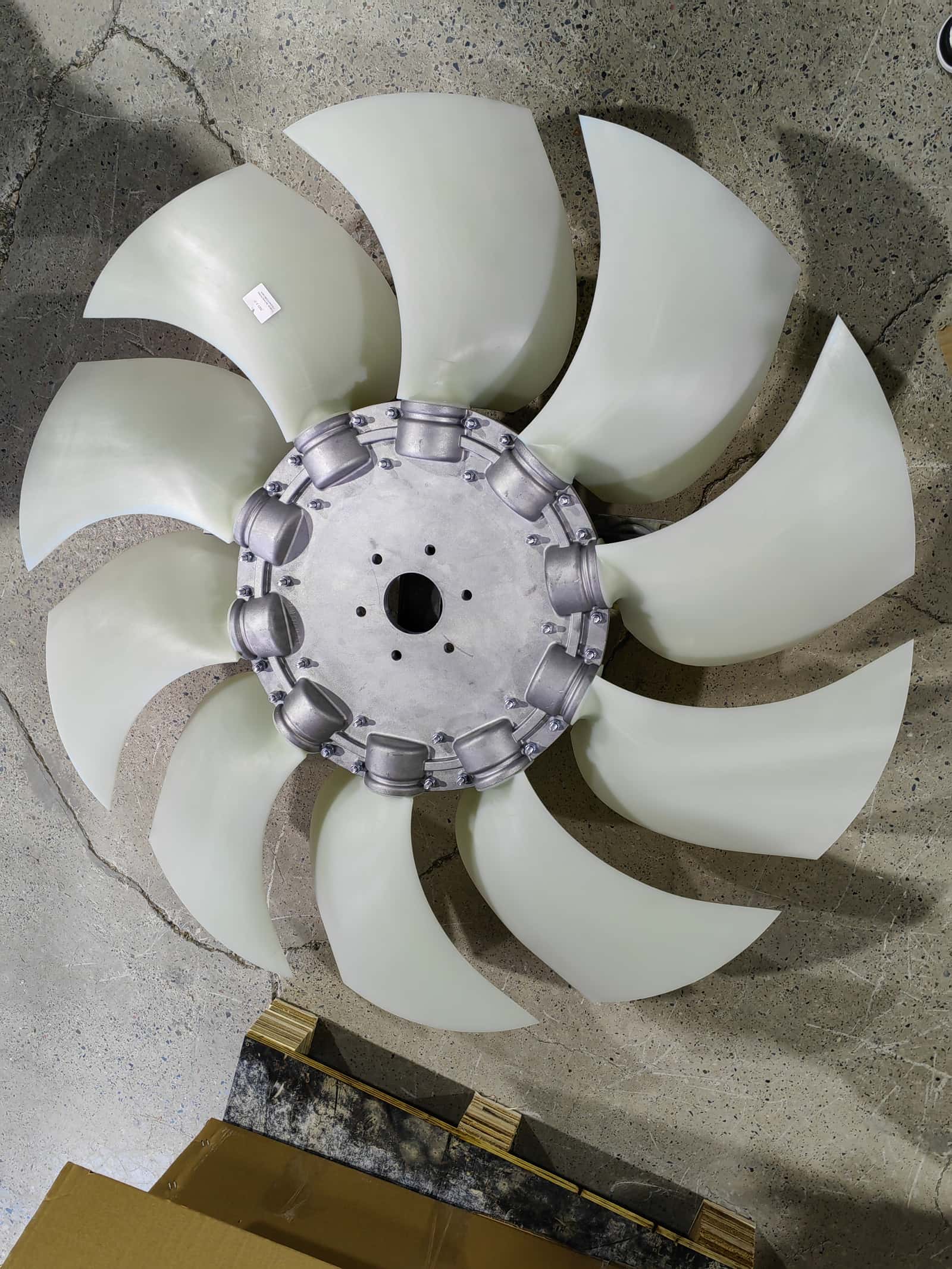
An axial fan moves air along the axis of rotation, using angled blades to accelerate the air. The blade is the heart of the fan, and its shape, angle and material determine how much air it moves and how efficiently it does so.
Evaluate the proposed impeller as part of the complete equipment. Acoustic response, input power and durability depend on the configuration, speed, installation and duty; they cannot be guaranteed from blade mass or geometry alone. Request the relevant test evidence, then compare installed results at the same operating requirement before publishing a saving, noise reduction or maintenance benefit.
The choice of blade material and design therefore has a direct effect on the performance and reliability of the whole ventilation system.
Lightweight Blades: The Operator-Friendly Advantage
Component mass and access affect installation and service handling for all operators. Review lifting, guarding and safe isolation with the equipment instructions. A lighter blade can be easier to handle, but the complete impeller, hub and mounting arrangement determine the handling task; no demographic assumption is needed to describe that benefit.
This combination of ease of handling and reduced mechanical load is one of the key reasons lightweight composite blades are preferred in livestock ventilation.
Starting Torque and Rotational Inertia
A fan that starts easily is a fan that can be trusted. A lightweight blade has low rotational inertia, which means it accelerates quickly and places less strain on the motor during start-up.
For start-up and variable-speed duty, review the assembled impeller’s rotational inertia, acceleration time and drive torque. Total blade weight alone does not establish those quantities, because mass distribution also matters. Evaluate motor or clutch limits and the tested configuration before claiming a quicker response or reduced mechanical wear.
Blades, Not Whole Machines: Our Focus
We specialise in fan blades, not complete fans. This focus means we concentrate our engineering on the component that most affects performance — the blade — and supply it to fan manufacturers and system integrators.
This blade-level focus lets us serve customers who build complete ventilation systems, providing them with blades that are engineered for their specific application rather than a generic off-the-shelf part.
For livestock ventilation, this means blades that are matched to the airflow requirements, the environmental conditions and the duty cycle of the barn.
Choosing the Right Blade for Livestock Ventilation
Selecting the right blade for livestock ventilation involves several factors: the size and layout of the barn, the airflow required, the operating environment and the duty cycle. The blade diameter and blade angle must be matched to the fan and the application.
Material selection must account for the actual temperature, humidity, chemicals and mechanical duty. A polymer or aluminium label does not establish immunity to corrosion, ageing, deposits or vibration damage. Review the exact material option and the complete assembly limits, then inspect representative equipment before making a service-life claim.
Our application guidance helps customers match the blade to the specific requirements of their barn, so that the ventilation system performs reliably and economically.
See a 6W Impeller in an Air-Movement Application
The 6W operating example gives a closer look at an impeller candidate for livestock ventilation discussions. Watch it after reviewing the distinction between circulation and exhaust duty; the building layout and resistance still determine what performance evidence you need.
An operating demonstration does not measure fresh-air exchange, air distribution or animal comfort. Request the configuration-specific fan curve and have the ventilation designer verify the installed duty, including the inlet and outlet paths.
Durability in a Demanding Environment
The livestock environment is hard on equipment. Humidity, ammonia and dust all take their toll on components, and a blade that corrodes or degrades will lose efficiency and eventually fail.
Composite fan blades are well suited to this environment, because they resist corrosion and do not degrade in the humid, contaminated air of a barn. They also tolerate the cleaning chemicals used in agricultural facilities.
Efficiency and Energy Use
Ventilation fans run for long hours, so their energy use is a significant operating cost. An efficient blade moves more air for the same power, which reduces the electricity bill over the life of the fan.
The blade shape and angle determine efficiency, and a well-designed blade can deliver meaningful energy savings in a continuous-duty application. For a farm running many fans, these savings add up quickly.
Quiet Operation for Animal Welfare
The balance and precision of the blade are what determine noise, which is why manufacturing consistency matters as much as the design itself.
Maintenance and Cleaning
Livestock fans accumulate dust and debris and must be cleaned regularly to maintain efficiency. A blade that is easy to access, handle and clean reduces the maintenance burden.
Lightweight blades are easier to handle during cleaning and inspection, which is another practical advantage in an agricultural setting where maintenance is often done by a small team.
A blade that is easy to clean also stays efficient longer, because a clean blade moves air more effectively than a fouled one.
Common Mistakes in Livestock Fan Selection
The most common mistake is selecting a blade on price alone, without considering durability and efficiency. In a continuous-duty application, a cheaper blade that corrodes or is inefficient will cost far more over its life.
Another mistake is mismatching the blade to the motor and the application. A blade that is too large or too steeply angled for the motor will strain the drive, while one that is too small will not move enough air.
A third mistake is ignoring the environment. A blade that is not suited to the humid, corrosive barn environment will degrade quickly, whatever its initial performance.
Blade Selection and Equipment Integration
Practical Checklist for Livestock Fan Blades
The following checklist summarises the key points when selecting a fan blade for livestock ventilation.
- Confirm the airflow and pressure requirements for the barn.
- Match the blade diameter and angle to the fan and motor.
- Choose a corrosion-resistant, durable blade material.
- Prefer lightweight blades for easy handling and reliable starts.
- Consider noise and animal welfare.
- Plan for regular cleaning and maintenance.
Quality Assurance and Manufacturing Consistency
Quality assurance requires configuration identification, material documents and agreed inspection records. The locally available fan-site ISO records are expired and are not offered as current certification. Confirm the current supplier documentation for the proposed model, and do not treat a quality-system document as evidence of an airflow, noise or complete-equipment safety rating.
This consistency is what turns a good blade design into a reliable product, and it is the foundation of a long service life in the demanding livestock environment.
The Economics of Livestock Ventilation
Ventilation is not a discretionary expense but an investment in animal productivity. Heat-stressed animals eat less, produce less and are more prone to illness, and the cost of poor ventilation shows up directly in reduced output.
For a farm planning a ventilation system, the blade choice should therefore be evaluated on lifetime cost, not just purchase price, because the two can differ substantially.
Ventilation Design Principles
Good barn ventilation follows a few basic principles. Air should enter and leave the barn in a controlled path, moving through the animal zone to carry away heat and contaminants. Fans provide the driving force for this airflow.
The placement and sizing of fans determine whether the air actually reaches the animals or simply short-circuits across the top of the barn. A well-designed system directs the air where it is needed.
Understanding these principles helps explain why the fan and its blade must be matched to the barn, rather than chosen in isolation.
Airflow, Pressure and Fan Sizing
Fans are rated by the airflow they deliver against the static pressure of the ventilation system. As pressure increases — through ducts, louvres or resistance — the airflow falls, and the fan must be sized to deliver the required air at the system's working pressure.
The blade design determines how well the fan maintains airflow against pressure. A blade that is efficient at the working point delivers more air for the same power, which is exactly what a barn needs to stay healthy.
Correct sizing requires knowing both the required air changes and the system resistance, and matching the blade to the fan and motor accordingly.
Composite Blade Materials and Construction
Composite fan blades are engineered for the demands of agricultural ventilation. They combine lightweight construction with the strength and corrosion resistance that a barn environment requires.
The blade is typically produced with a controlled, balanced geometry so that every blade in a set is identical. This consistency is what allows the fan to run smoothly and quietly, without the vibration that unbalanced blades produce.
The material itself resists the humidity, ammonia and cleaning chemicals of the barn, which extends the blade's service life and keeps it performing reliably.
Balancing and Vibration
A fan blade that is out of balance vibrates, and vibration is the enemy of reliability. It stresses the bearings, loosens fasteners and produces noise, and it can shorten the life of the whole fan.
For a ventilation fan that runs continuously, the balance of the blade is one of the most important factors in its long-term reliability.
Installation Best Practices
A good blade is only as good as its installation. The blade must be mounted correctly, aligned with the fan axis, and the fasteners must be torqued correctly, so that the fan runs true and balanced.
Installing a lightweight blade is easier and safer, which is a real benefit in the field, where installation is often done on a ladder or in a confined space.
Correct installation also includes checking that the blade rotates freely and that the fan is wired correctly, so that the system starts and runs as intended.
Seasonal Operation and Control
Ventilation needs change with the season, and many barns use variable-speed or staged fans to match the ventilation to the conditions. The blade must perform well across the full range of speeds.
This flexibility, combined with efficient operation at part speed, is what makes a good blade a good fit for modern, controlled ventilation systems.
Common Applications: Dairy, Swine and Poultry
Each livestock type has its own ventilation needs. Dairy barns need high airflow to remove heat and humidity from large animals, while poultry houses need precise control of temperature and air quality.
Swine barns must manage both heat and the ammonia produced by manure, which makes corrosion resistance and reliability especially important.
Across all of these applications, the fan blade plays the same essential role, and the same qualities — efficiency, durability, light weight and balance — are what determine success.
Regulatory and Animal Welfare Considerations
Animal welfare regulations increasingly require that livestock be kept in well-ventilated conditions, and farmers must demonstrate that their barns provide adequate airflow and air quality.
A reliable ventilation system is central to meeting these requirements, and the fan blade is the component that must keep running dependably to maintain the conditions the regulations demand.
Choosing a durable, well-made blade is therefore not only an operational decision but also a compliance decision, supporting the welfare of the animals and the standing of the farm.
Understanding Fan Performance Curves
A fan's performance is described by a curve that shows airflow against static pressure. Understanding this curve is essential to matching a fan and blade to a ventilation system, because the fan must deliver the required air at the system's working pressure.
The blade design shapes this curve. A blade that holds airflow well against pressure is better suited to systems with ducting or louvres, while a free-blowing blade suits open, low-resistance barns.
Selecting the blade with the right performance characteristics ensures the ventilation system delivers the intended airflow, without overloading the motor or wasting energy.
Controls, Maintenance and Procurement
Material Selection for Agricultural Environments
The material of the fan blade must withstand the specific conditions of the barn — humidity, ammonia, dust and cleaning chemicals. A material that corrodes or degrades will lose efficiency and fail prematurely.
Composite blades are the preferred choice for these environments, because they resist corrosion and do not degrade in the humid, contaminated air. They are also lighter than metal, which brings the handling and start-up benefits discussed earlier.
The right material choice extends the life of the blade and keeps the ventilation system performing over the long term, which is why it is a key specification for agricultural fans.
The Importance of Precision Manufacturing
A fan blade must be manufactured to close tolerances, because even small variations in geometry or balance affect performance and produce vibration. Precision manufacturing is what turns a good design into a reliable product.
This is why a controlled manufacturing process, with documented traceability, matters as much as the design itself — it is the difference between a blade that performs reliably and one that does not.
Retrofit and Replacement Blades
Compare configurations under the required duty rather than ranking materials or features universally. A reversible system can support radiator cleaning, but effectiveness, safe sequencing and cooling during the cycle must be evaluated on the equipment. It does not remove manual inspection or maintenance, and performance in each direction must be established separately.
A replacement blade must match the fan and motor, and it should be specified with the same care as the original, including diameter, angle, material and balance. A correctly matched replacement restores the fan to its designed performance.
Working With a Blade Supplier
A good blade supplier is a partner in your ventilation system, not just a vendor. Look for a supplier that offers consistent, well-documented blades, application guidance and support through the life of the system.
The supplier should help you match the blade to your fan and application, and should provide the specifications and traceability you need to specify and verify the product.
For system builders and farmers alike, a reliable supplier reduces the risk of mismatch and provides the continuity that a long-running ventilation system depends on.
Frequently Overlooked Details
A few details are easily overlooked but matter in practice. The first is cleaning access — a blade that is easy to reach and remove makes routine cleaning simpler, and a clean blade is an efficient blade.
The second is the fastening. The blade must be securely fastened to the hub, and fasteners should be checked periodically, because a loose blade is both inefficient and dangerous.
The third is the environment beyond the obvious. Dust, ammonia and moisture all affect the blade and the drive, and a blade selected for these conditions will last far longer than one that ignores them.
Air Quality and Contaminant Removal
Ventilation does more than cool — it removes the contaminants that accumulate in a barn. Ammonia from manure, carbon dioxide from respiration, and dust from bedding and feed all build up without adequate airflow.
These contaminants affect animal health directly. High ammonia irritates the respiratory tract and reduces growth and production, while dust carries pathogens that spread disease through the herd or flock.
The fan blade drives the airflow that carries these contaminants out of the barn, which makes it central to air quality as well as temperature control. A reliable blade is therefore a health measure, not just a comfort measure.
The Science of Heat Stress in Livestock
Livestock are sensitive to heat, and the effects of heat stress are measurable. As temperature and humidity rise, animals reduce feed intake, lose productivity and become more susceptible to illness.
Ventilation is the primary defence against heat stress, because moving air accelerates the loss of body heat. The faster the air moves over the animals, the more effectively they shed heat, which is why airflow is so critical in hot weather.
Understanding this mechanism explains why the fan blade — the component that produces the airflow — is so important, and why its efficiency and reliability directly affect animal welfare and productivity.
Choosing Between Blade Materials: A Closer Look
Fan blades are made from metal or composite materials, and each has its trade-offs. Metal blades are stiff and familiar, but they are heavier and can corrode in the barn environment.
Composite blades are lighter and resist corrosion, which makes them well suited to agricultural ventilation. Their low weight also brings the handling and start-up benefits that matter in the field.
For most livestock applications, the combination of corrosion resistance, light weight and durability makes composite blades the better long-term choice, even where the initial cost is slightly higher.
Key Specifications to Look For
When specifying a fan blade for livestock ventilation, look for the key specifications that determine performance and reliability: the diameter, the blade angle, the material and the balance.
The diameter and angle set the airflow, the material sets the durability in the environment, and the balance sets the smoothness and quietness of operation. All four should be matched to the application.
A supplier that documents these specifications, with traceability to the manufacturing process, gives you the confidence to specify and verify the blade for your system.
Fan and Blade Maintenance Planning
A ventilation system is only as reliable as its maintenance, and a little planning goes a long way. Establish a routine for inspecting and cleaning the fans, and for checking the blade fasteners and balance.
Scheduling maintenance around the seasons helps — clean and inspect the fans before the hot season, when ventilation demand is highest, so that the system is ready when it matters most.
Keeping spare blades on hand for critical fans is also wise, because a failed blade should be replaced promptly to avoid a ventilation gap that stresses the animals.
Documented Parameters and Their Limits
Source: UTEK-DELE material specifications in the site knowledge base. Values belong to the material register, not to an assembled fan rating. No airflow, static pressure, speed, absorbed power or sound-level number is supplied here because configuration-specific evidence is needed.
| Material | Documented composition | Material temperature range | Boundary |
|---|---|---|---|
| PAG | PA6 + 30% glass fibre | −40 to 110°C | Confirm model and complete assembly limits |
| PAGAS | PA6 + 15% carbon fibre + 15% glass fibre | −30 to 100°C | Conductive option; not an ATEX approval |
| ALU | ADC12 die-cast aluminium | −40 to 150°C | Not a complete-fan fire or service-life rating |
What the values do not establish
A temperature range alone does not establish chemical compatibility, maximum speed, fan safety or service life. The hub, attachments and drive can set a lower limit, and the installed air condition may differ from ambient temperature. Request written confirmation for the exact proposed combination. A short-duration heat statement cannot be expanded into a continuous rating or a fire-certified complete fan.
Circulation vs Exhaust Duty
Compare candidates against the same requirement. The distinctions below guide an enquiry; they are not a universal performance ranking.
| Circulation duty | Exhaust duty |
|---|---|
| Redistributes air within a defined area | Moves air across the building boundary |
| Evaluate air distribution at relevant locations | Evaluate the complete inlet-to-outlet airflow path |
| Does not itself establish fresh-air exchange | Depends on adequate inlets, shutters and system resistance |
When should you consider the first option?
Redistributes air within a defined area. Assess this option against the actual drawing, load or operating point and acceptance requirements. It is a candidate to evaluate rather than a default recommendation for every installation or construction.
When should you consider the second option?
Moves air across the building boundary. Check the additional interfaces and process or control requirements before adopting this option. Compare representative results and total implementation needs rather than inferring superiority from the feature name alone.
Application scenario: barn ventilation
A circulation fan over a livestock area and an exhaust fan at the building boundary solve different problems. The first may redistribute air without establishing fresh-air exchange; the second depends on an adequate inlet path and pressure difference. Specify the intended duty before selecting a 6W or another candidate assembly. Have the ventilation designer determine the required distribution and exchange for the building, stocking and operating conditions. This article does not prescribe species-specific ventilation rates or promise that one blade model prevents heat stress or health problems.
Common Mistakes to Avoid
- Selecting by diameter without a tested operating point. Pitch, speed, blade count and resistance change the result. Obtain the complete configuration curve.
- Equating lower component mass with energy savings. Rotational inertia concerns mass distribution, while steady-state power depends on the aerodynamic duty. Compare measured input power at an equivalent requirement.
- Using the material temperature range as a complete fan rating. Hub, drive and attachments may have different limits. Confirm the assembled configuration before approval.
- Calling conductive PAGAS an ATEX certificate. A material option does not certify complete equipment for an explosive atmosphere. Obtain the applicable assessment and documents.
- Assuming reversal replaces inspection or works equally in both directions. Cleaning and cooling must be evaluated separately. Follow the approved control sequence and maintenance instructions.
Practical Specification and Verification Checklist
Define the complete enquiry
Provide the target airflow and resistance from the system designer, together with the available opening, proposed impeller diameter, rotation and airflow direction. Include a drawing of the motor or drive interface rather than relying on a photograph alone. State whether the fan must push or pull through the equipment, and identify the inlet and outlet obstructions. The supplier can then evaluate a candidate configuration against a defined problem. If a requirement is unknown, label it as unresolved instead of filling the enquiry with a guessed performance number.
Review the material and environment
Record the air temperature where the impeller actually operates, including abnormal conditions the equipment specification requires it to withstand. Describe humidity, dust, cleaning chemicals and any contact with droplets. The documented material temperature ranges are useful screening information, not proof that a complete fan will survive the same duty. Hub, fasteners, bearings and drive elements may impose different limits. Request written compatibility advice for the proposed combination and keep the response with the configuration record. Do not convert a short-duration material statement into a continuous operating claim.
Obtain configuration-specific performance evidence
Request the airflow-pressure curve and absorbed power for the proposed diameter, pitch, blade count, speed and air density. Ask how the test arrangement represents the intended installation and what uncertainty or tolerances apply. A report should allow the engineering team to identify the tested assembly and compare it with the drawing. Where acoustic performance matters, obtain the corresponding sound data and test conditions as a separate deliverable. This article deliberately provides no invented airflow, static-pressure, speed, power or noise values for a blade model.
Check the mechanical integration
Review the hub attachment, shaft or flange dimensions, rotation, guard, clearances and permitted mounting orientation against the equipment drawings. Check the drive load across the intended operating range rather than only at a nominal point. The installer must follow the supplied tightening and assembly procedure; this article is not a source of universal torque or tip-clearance settings. Confirm access for inspection and replacement before finalising the layout. A blade swap that appears geometrically possible still needs an engineering assessment of the complete rotating assembly.
Commission the installed equipment
Compare the as-built configuration with the approved drawing before operating the equipment. Commissioning should use the equipment maker’s safety procedure and qualified personnel. Record airflow or the relevant cooling response, drive loading and unusual vibration under the specified test conditions. Correct installation problems before interpreting a blade change as successful. Keep the inlet and outlet arrangement consistent when comparing alternatives, because a different guard, shutter or shroud can change the result. A catalogue curve and an installed measurement answer related but different questions.
Make maintenance traceable
Create a baseline inspection record showing the approved model, hub, material and pitch setting, then retain photographs and configuration identifiers. Use the equipment manual to define safe isolation, cleaning and inspection tasks. Check for damage, loosened attachments, deposit build-up and changes in vibration; do not treat cleaning as a substitute for investigating damage. Maintenance frequency should reflect duty and manufacturer instructions rather than a universal interval. Record replacements and any configuration changes so that later reordering does not silently mix different blades or settings within an assembly.
Evaluate lifecycle cost with measured inputs
Compare candidates at the same required duty and air conditions using measured or appropriately documented input power. Include purchase, installation, access, cleaning and replacement costs in the evaluation. Label assumptions such as running hours and electricity price, and keep sensitivity calculations separate from guaranteed product savings. A lighter blade does not, by itself, prove lower steady-state energy use. Likewise, an adjustable pitch feature does not establish an optimum setting without test evidence. The useful outcome is a traceable comparison for the actual equipment rather than a generic promise of lower bills.
Control subsequent changes
Retain the final model, material, blade count, hub, pitch, drive and test report identifiers as a configuration baseline. Ask the equipment owner to assess a change before ordering an alternative blade, even if its external size is similar. Changes to controls, guards or restrictions also deserve review because they can shift the operating condition. Repeat the relevant acceptance measurements after a significant modification. This process prevents a successful initial trial from becoming an unsupported claim that any later component combination will deliver the same cooling or ventilation result.
- Confirm the model, construction and current technical documents.
- Resolve the operating or structural requirement before comparing candidates.
- Approve a representative trial and retain its configuration and test evidence.
- Assess later substitutions against the accepted baseline.
Product Examples for Your Technical Enquiry
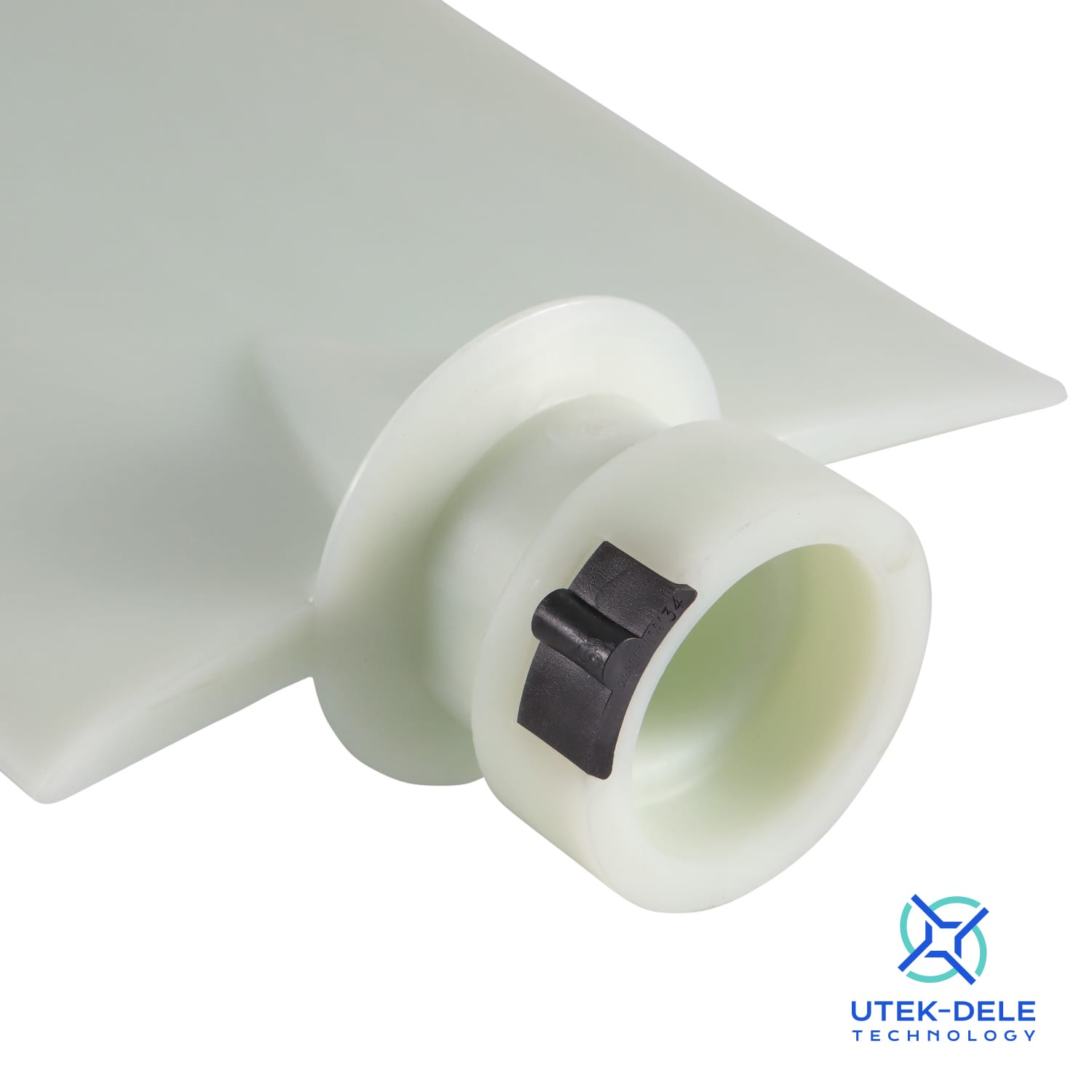
The following registered product photographs identify candidates for a technical enquiry. Confirm the current model specification and configuration before substitution; the photographs and videos are not test reports.


Quality Assurance and Performance Evidence
Request material identification, configuration drawings and agreed dimensional and balance inspection records for the order. No expired ISO image is used here as a current quality credential. A patent, material option or management-system document does not establish complete-fan aerodynamic performance or a safety approval.
AMCA lists laboratory aerodynamic testing and separate fan sound-rating methods. Ask for the relevant configuration-specific evidence; citing those methods does not mean an UTEK-DELE product is AMCA certified.
AMCA’s publications catalogue distinguishes aerodynamic and sound-rating documents. Keep acoustic evidence separate from airflow evidence and do not infer either result from the blade photograph.
Final Thoughts
A useful specification joins the application requirement, selected material or configuration, manufacturing or installation details and acceptance evidence. Keep targets separate from measured results and confirm current documents with the supplier. This article is a selection guide, not an operating manual, structural approval or universal performance guarantee.
For the next development stage, prepare a configuration enquiry that identifies the equipment drawing, intended duty and unresolved performance requirements. Ask UTEK-DELE to confirm the relevant blade, material and hub options, then agree the evidence needed for a representative trial. Keep the comparison tied to the complete impeller and installation. The final acceptance decision should rest on measured performance and mechanical compatibility rather than a generic promise attached to a blade category.
Frequently Asked Questions
Can a circulation fan replace barn exhaust ventilation?
Not by assumption; circulation redistributes air while exhaust duty moves air across the building boundary. Assess inlets, outlets and the required exchange with the ventilation designer. A circulation demonstration is not evidence that a barn achieves its required fresh-air duty.
Are lightweight blades guaranteed to save energy?
No; blade mass does not establish steady-state aerodynamic efficiency. Compare input power at the same required duty and air conditions. Keep handling benefits separate from measured operating-cost claims.
Which material temperature ranges are documented?
The general material register gives PAG −40 to 110°C, PAGAS −30 to 100°C and ALU −40 to 150°C. These are material-screening ranges, not complete-equipment ratings. Confirm the exact model and all assembly limits with the supplier.
Does PAGAS mean the fan is ATEX certified?
No; the documented conductive material option is not an ATEX certificate. An application involving an explosive atmosphere requires the applicable complete-equipment assessment. Do not infer a safety approval from a material abbreviation.
Is adjustable pitch the same as reversible operation?
No; manual pitch adjustment and a purpose-designed variable-pitch mechanism are different features. A hydraulic or pneumatic reversible system needs its specified controls and operating sequence. Establish normal cooling and reversal performance separately.
Can noise be predicted from a blade photograph?
No; geometry and balance alone do not establish a sound rating. Request acoustic evidence for the proposed operating configuration and test conditions. Verify the installed result where an acoustic requirement applies.
Can a visually similar blade replace an existing one?
Not without checking the approved configuration and mechanical interface. Review hub, material, blade count, pitch, drive, rotation and clearances. Follow the equipment maker’s assessment and acceptance procedure for the change.
Does a quality-system certificate prove fan performance?
No; quality-system evidence and configuration-specific performance tests answer different questions. The locally available ISO records are expired and are not represented as current certification. Request current documents and the relevant fan test evidence separately.
How should maintenance frequency be chosen?
Use the equipment instructions and actual duty, deposits and inspection findings. This guide does not prescribe a universal cleaning interval. Isolate the equipment safely before inspecting, cleaning or replacing components.
What should an enquiry to UTEK-DELE include?
Provide the required operating point, drawing, environment, drive details and intended model or material. Describe whether the duty is ventilation, heat-exchanger cooling or a reversible cleaning application. Identify missing performance requirements so they can be resolved before configuration approval.